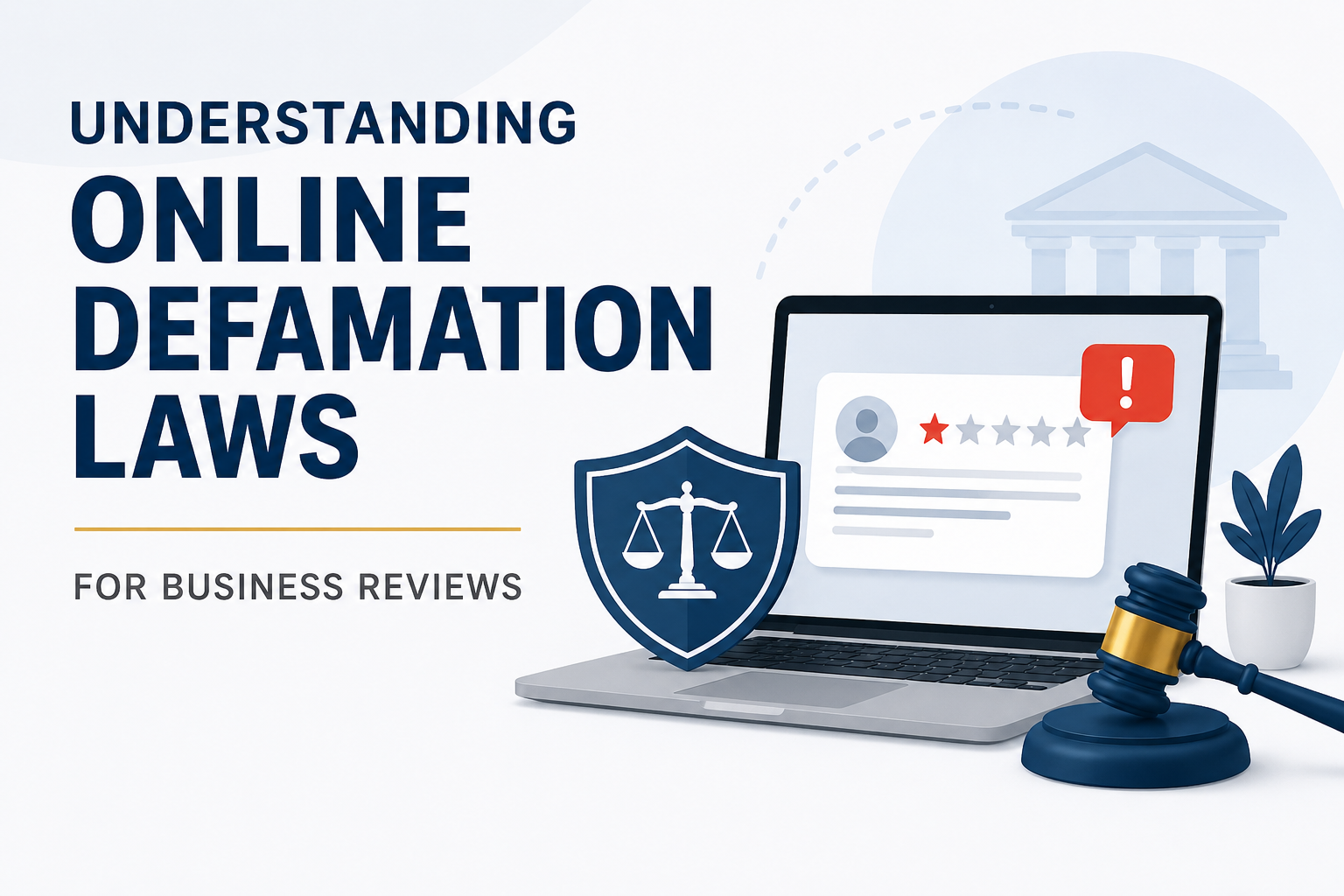
In an era where a single online post can reshape market perceptions, businesses face mounting legal exposure from defamatory statements. This overview examines the core elements of online defamation-false statements, publication, and resulting harm-while highlighting corporate reputation risks and available remedies. Readers will also gain insight into common defenses and preventive strategies that protect brand integrity across jurisdictions.
Definition and Types
Libel involves written false statements like negative Google reviews or LinkedIn posts, while slander covers spoken false statements such as false statements in Zoom meetings or podcast episodes. Business owners must recognize these differences when monitoring their online presence. Written statements often leave lasting evidence.
Companies face multiple forms of defamation under current online defamation laws. These types include libel and slander as primary categories. Each carries distinct legal implications for business reputation.
Libel includes false statements published in digital formats. A competitor might post incorrect profit figures on their website to mislead customers. This practice damages trust and can trigger defamation claims.
Google reviews and social media posts on platforms like Twitter or Instagram also qualify as libel. Blog articles containing inaccurate information about competitors represent another common source of risk. Business managers should monitor these channels.
Slander occurs when someone makes spoken false statements that harm a company. Examples include verbal attacks at industry conferences or during recorded video calls. These situations can escalate into defamation lawsuits.
Businesses encounter false light when organizations publish misleading information. A company might edit customer testimonials to imply endorsement without proper consent. This creates a false impression about products or services.
Public disclosure of private facts involves revealing sensitive personal information without consent. Medical records or financial details shared publicly represent typical violations. Such actions can result in costly legal consequences.
Companies pursue damages when defamation occurs. Courts have awarded substantial compensation in various cases. One California matter involved false business reviews and resulted in significant financial recovery.
Key Legal Elements
A defamation claim requires proof of four specific elements: a false statement of fact, publication to a third party, fault amounting to actual malice or negligence, and resulting damages to the plaintiff’s reputation.
Defamation elements create the foundation for any successful claim. Courts examine each component carefully before allowing a case to proceed. The plaintiff bears responsibility for establishing every element through credible evidence.
Business owners face unique challenges when negative statements appear online. Reputational harm can affect customer trust and revenue streams. Legal systems require clear distinctions between protected speech and actionable statements.
Understanding these standards helps businesses respond appropriately to online criticism. Courts apply different rules depending on the nature of the statement and the identity of the speaker. Professional guidance becomes essential when assessing potential claims.
False Statement and Publication
A false statement must present verifiable facts rather than protected opinions, as demonstrated when a court dismissed a case against a Yelp reviewer who wrote ‘I think their service is terrible’ but upheld a claim when the same reviewer stated ‘They used unlicensed contractors.’
Statement of fact differs from opinion in important ways. Saying a plumber overcharges customers expresses a personal view. Saying the same plumber charges five hundred dollars for a two hundred dollar job creates a verifiable claim that courts can evaluate.
Publication requires the statement to reach at least one third party. Facebook posts typically satisfy this requirement because they reach friends or followers. Instagram stories may qualify if they appear in public accounts or get shared beyond the original audience.
Private messages create different considerations. TripAdvisor reviews generally meet publication standards when posted publicly. A Slack message sent to one colleague may fall short of the threshold. The statement must also identify the business specifically, either by name or clear implication.
Damage and Fault Standards
Plaintiffs must prove actual damages in most jurisdictions, though defamation per se cases involving accusations of criminal conduct or professional incompetence allow presumed damages without specific proof.
Compensatory damages address documented financial losses. A business might recover expenses from lost contracts when false statements appear on LinkedIn. Courts examine financial records to determine appropriate amounts in these situations.
Defamation per se covers statements about criminal activity or professional incompetence. Punitive damages become available when the defendant acts with actual malice. This standard requires knowledge of falsity or reckless disregard for the truth.
Public figures face higher burdens under established precedent. They must prove the defendant knew the statement was false or acted with reckless disregard. Private individuals typically need only show negligence by the speaker. Different platforms create varying levels of exposure for statements made online.
Business-Specific Considerations
Businesses face unique defamation risks since false statements can directly impact customer acquisition, with the Better Business Bureau reporting that 87% of consumers read online reviews before making purchase decisions.
Online defamation targeting companies often appears in public forums where customers share experiences. Negative reviews that contain false statements can harm customer trust and reduce sales opportunities. These situations require careful monitoring and timely responses from business owners.
Review platforms maintain specific policies that affect how businesses handle defamation claims. Google requires proof of falsity for removal while Yelp allows businesses to flag reviews for policy violations. Understanding these rules helps companies take appropriate action when false information appears online.
Legal action can restore lost revenue when defamatory content damages a company’s reputation. One restaurant chain recovered substantial funds after successfully removing false TripAdvisor reviews through legal channels. Such cases demonstrate why businesses need strategies for addressing harmful content quickly.
Corporate Reputation Risks
A single false statement on Glassdoor or Indeed can reduce qualified job applications by up to 30%, according to a 2023 LinkedIn Talent Solutions report covering 5,000 companies.
Corporate reputation faces threats from multiple sources in the digital space. False product safety claims on social media may trigger regulatory scrutiny from agencies like the FTC or FDA. These situations often require immediate legal attention to protect the business entity.
Competitor posts alleging intellectual property theft can deter potential investors from engaging with a company. Customer service complaints amplified on Twitter can create lasting reputational harm. Business managers must monitor these channels to prevent damage from spreading.
Companies that invest in reputation management often experience stronger customer retention. A tech startup lost a funding round after false comments alleged data breaches on a popular tech site. This example shows how quickly online defamation can affect business relationships and growth prospects.
Identifying Defamatory Content
Businesses should conduct monthly defamation audits using specific criteria to identify false statements across Google, Yelp, TripAdvisor, and social media platforms including Facebook, Twitter, and LinkedIn. Regular monitoring helps catch issues early before they spread. These audits create a consistent process for reviewing content.
Reviewers need to separate statements of fact from mere opinions. The Milkovich test helps determine whether a claim can support a claim. Fact-based assertions receive closer scrutiny under online defamation laws than pure opinions do.
A seven point checklist guides this evaluation process. Each item addresses a different part of the analysis required under current precedent.
Start by verifying the nature of the statement. Confirm whether it meets the publication requirement for a defamation claim. Assess whether the comment identifies your business specifically and gather proof of its falsity.
Businesses track changes in customer inquiries and revenue to calculate potential damages. They also note the publication platform and its moderation policies. Determining jurisdiction requires attention to the poster’s location as well.
- Verify if statement is fact or opinion using the Milkovich test.
- Confirm publication to third parties by checking visibility settings.
- Assess whether statement identifies the business specifically.
- Document evidence of falsity through contracts, receipts, or witness statements.
- Calculate potential damages by tracking customer inquiries and revenue changes.
- Identify publication platform and its moderation policies.
- Determine jurisdiction by noting the poster’s location.
The folgenden audit report captures these details. Organized records support legal consultations later on.
| Platform | Statement Text | Date | Risk Level |
| Staff always arrives drunk. | 2024-01-15 | High | |
| Yelp | The location feels unsafe. | 2024-01-18 | Medium |
| Owner cheats customers routinely. | 2024-01-20 | High |
Legal Remedies and Damages
Plaintiffs can pursue cease and desist letters, injunctive relief, and monetary damages ranging from $5,000 for minor cases to multimillion dollar verdicts in cases involving widespread social media dissemination. Online defamation laws provide multiple pathways for businesses to address harmful statements that damage their standing in the marketplace.
Understanding these options helps business owners make informed decisions about protecting their interests. Each remedy carries different costs, timelines, and potential outcomes that require careful evaluation before moving forward.
Business managers often start by consulting legal counsel to assess the strength of their defamation claims. This initial step clarifies whether false statements meet the required elements under applicable state law and federal precedents.
Early action through formal channels can prevent further dissemination of damaging content across digital platforms. Companies that act promptly often achieve better results in limiting ongoing reputational harm.
Cease and Desist Letter
A cease and desist letter serves as the first formal step in many defamation cases. This document demands that the individual or entity stop making false statements and remove existing content from public view.
Attorneys typically prepare and send these letters via certified mail to create a documented record of the request. The process usually requires professional legal drafting to ensure compliance with procedural requirements in the relevant jurisdiction.
Recipients who receive such notices often respond within a defined period, allowing businesses to resolve issues without further escalation. Many situations conclude at this stage when parties agree to remove problematic material.
Business owners should retain copies of all correspondence for their records. Documentation supports any subsequent legal action if the initial request does not achieve the desired outcome.
Platform Reporting
Many companies report harmful content directly to the platforms hosting the statements. Online defamation frequently appears on review sites, social media networks, and discussion forums where established moderation systems operate.
Google, Yelp, and Facebook maintain content policies that address false or misleading material. Submitting reports through official channels alerts moderators to potential violations of community guidelines and terms of service.
Each platform maintains different standards for evaluating claims. Success depends on demonstrating that statements violate specific rules rather than merely presenting a business perspective on the matter.
Platform reporting works best when combined with other strategies. Companies achieve stronger results when they document every submission and follow up consistently with support teams.
Lawsuit Filing
Businesses may file lawsuits when other methods fail to produce satisfactory outcomes. Defamation lawsuits require proof of falsity, publication, and resulting harm to the business entity or its operations.
The process demands substantial preparation including collection of evidence and identification of witnesses. Legal teams evaluate jurisdiction issues and determine whether statements qualify as fact or protected opinion under First Amendment standards.
Initial court filings trigger discovery procedures that allow both parties to exchange information. This phase often reveals additional details about the scope and impact of the damaging statements.
Companies considering litigation should understand the time commitment involved. Most cases require many months of active management before reaching resolution through trial or negotiated agreement.
Injunction Order
An injunction represents a court order compelling removal of defamatory content and prohibiting future publication. Judges issue these orders when evidence shows ongoing or imminent reputational harm that monetary compensation cannot fully address.
Penalties for non compliance can include fines or other sanctions against defendants who ignore court directives. The threat of enforcement often motivates parties to comply with removal requests promptly.
Businesses obtain injunctions through formal motions supported by affidavits and exhibits. Courts require clear demonstration that statements meet the legal definition of defamation under applicable state statutes.
Once granted, injunctions provide ongoing protection against repeated violations. Companies maintain records of court orders to support enforcement actions if violations occur later.
Settlement Negotiations
Most defamation claims resolve through negotiated settlements rather than full trials. Parties reach agreements that include content removal, public statements, and financial compensation for damages incurred.
Settlement discussions allow businesses to control outcomes without the uncertainty of court rulings. Negotiated resolutions frequently include confidentiality provisions that limit further public discussion of the dispute.
Business managers work with attorneys to evaluate settlement offers against the costs and risks of continued litigation. Factors such as strength of evidence and potential jury awards influence these decisions.
Agreements typically address both immediate concerns and future prevention measures. Companies often secure commitments from defendants to avoid similar statements in subsequent communications.
Defenses Against Claims
Common defenses include truth as an absolute defense, opinion protection under the First Amendment, and various privileges including fair comment on matters of public concern. Businesses facing online defamation claims benefit from understanding these protections. Several established legal mechanisms exist to shield defendants from liability.
These defenses apply differently depending on the context. Each one requires specific elements that courts evaluate carefully. Business owners should recognize when these protections might apply to their situation.
Knowing which defense fits a given case helps shape a stronger response. Reviewing the facts against these standards reveals viable options. Legal counsel can assess the strength of available arguments.
Documentation and timing also influence outcomes. Clear records support certain claims. Early consultation with professionals improves strategic decisions.
Truth
Truth serves as an absolute defense in defamation lawsuits. The defendant must prove the statement accuracy through documentation or witness testimony. Courts examine whether the published content matches reality.
Businesses often maintain records that support their statements. Emails, contracts, and customer communications provide useful evidence. These materials demonstrate the factual basis for any comments made.
Consider a company that posts about a contractor failing to complete work as promised. Invoices and project timelines can verify the claim. Strong proof reduces the risk of liability.
Witness statements add another layer of support. Former clients or employees may confirm certain events. Their accounts can strengthen the overall position in court.
Opinion
Statements using words like I believe or in my opinion receive protection as expressions of personal views. Courts distinguish between statements of fact and personal assessments. The 2018 California case involving restaurant reviews illustrated this difference.
Businesses posting customer feedback should maintain clear language boundaries. Phrases that signal subjective judgment limit exposure to claims. Review platforms often encourage these distinctions naturally.
A manager who writes that a product seems unreliable based on personal experience relies on opinion protection. Such comments differ from assertions about specific defects. The wording matters significantly.
Readers generally understand opinion statements as individual perspectives. This understanding reduces the likelihood of legal action. Clear phrasing helps prevent misunderstandings.
Absolute Privilege
Absolute privilege protects statements made in judicial proceedings or legislative hearings. This protection applies regardless of the content accuracy. Courts extend this safeguard to encourage open participation in legal processes.
Businesses involved in litigation should understand this boundary. Comments made inside a courtroom or during official testimony receive full coverage. The context determines whether the privilege applies.
A company executive testifying about a contract dispute enjoys this protection. The same statements posted on social media would lack the same shield. Location and setting remain critical factors.
Legislative hearings follow similar rules. Statements delivered during official government sessions fall under this category. This principle supports public discourse without fear of retaliation.
Qualified Privilege
Qualified privilege covers statements made in good faith during employment references or credit reports. The defense requires honest intent and appropriate context. Courts evaluate whether the communication served a legitimate purpose.
Businesses frequently provide references for former employees. These communications receive protection when delivered to proper recipients. The information must relate directly to job performance.
A former employer describing attendance issues to a potential new employer acts within protected boundaries. The statement must avoid unnecessary details. Proper scope preserves the privilege.
Financial institutions preparing credit reports also benefit from this defense. Accurate reporting supports business decisions across industries. Good faith remains essential throughout the process.
Fair Comment
Fair comment protects honest opinions on public matters like restaurant reviews or product performance. This defense applies when the subject involves legitimate public interest. Courts require that comments remain connected to verifiable facts.
Businesses that publish reviews often rely on this protection. Customer feedback about service quality falls into this category. The comments must reflect genuine beliefs supported by experience.
A consumer who states that a restaurant meal tasted poor speaks from personal observation. Such statements differ from false claims about health violations. The distinction proves important.
Product performance discussions follow similar patterns. Honest assessments of quality receive coverage when based on actual use. This defense encourages open marketplace dialogue.
Neutral Reportage
Neutral reportage allows accurate reporting of newsworthy allegations made by others. This privilege applies when journalists or commentators relay information from reliable sources. The 2021 New York court dismissed a claim against a journalist who accurately reported allegations from a lawsuit filing.
Businesses issuing press releases or responding to media inquiries should note this protection. Reporting on public records receives consideration as long as the content remains faithful to the original source. Accuracy matters most.
A company newsletter that describes ongoing litigation without adding commentary qualifies under this approach. The publication must avoid endorsement or embellishment. Neutral presentation strengthens the case.
Media outlets frequently use this defense when covering disputes. Their role as information channels receives recognition. Accurate relay of external claims generally receives protection.
Preventive Measures
Businesses should implement written defamation policies and conduct quarterly training sessions covering social media usage, review response protocols, and legal compliance requirements. These steps help organizations reduce their exposure to potential claims. Clear guidelines also support better decision making across teams.
Written social media policies provide structure for employee communications. A comprehensive policy should address fifteen specific areas including false claims about competitors. This document outlines acceptable practices and sets clear boundaries for online interactions.
Employees benefit from understanding how certain statements can trigger legal issues. The policy should include guidance on competitor comparisons and how to avoid crossing into problematic territory. Regular updates keep the document current with evolving standards.
An example policy template section might state that all competitor comparisons require factual verification before posting. Employees should avoid unsubstantiated claims about rival products or services. This approach helps maintain professional standards while reducing legal risks.
Employee Training Programs
Quarterly training sessions lasting forty five minutes help employees recognize potential issues. These documented sessions should cover real case examples to illustrate consequences. Teams learn to identify risky statements before they appear online.
Documented training records demonstrate a commitment to compliance. Sessions should include discussions about proper handling of customer interactions. Employees gain practical skills for navigating difficult situations.
Training content should address both platform specific challenges and general principles. Review monitoring tools like Mention or Brandwatch can be introduced during these sessions. Staff members learn how alerts support early intervention.
Case studies help employees understand the progression from statement to claim. Participants practice identifying statements that might require additional review. This preparation builds confidence in daily decision making.
Monitoring and Response Systems
Review monitoring systems track mentions across platforms. Tools set to alert within two hours of negative posts allow for timely assessment. Early detection supports more effective management of emerging issues.
Organizations should establish response protocols that include a forty eight hour review period for flagged content. This timeline balances the need for speed with thoughtful consideration. Consistent processes help ensure appropriate handling.
Documentation of all customer interactions should be maintained for three years. This practice supports both internal review and potential legal needs. Records provide context when assessing particular statements.
Annual legal audits conducted with outside counsel help identify gaps in current approaches. Typical costs range from two thousand five hundred to five thousand dollars. These reviews provide fresh perspectives on existing policies.
Insurance and Risk Management
Media liability insurance offers protection against potential claims. Coverage amounts typically range from one million to five million dollars. This coverage provides a financial buffer when issues arise.
Insurance discussions should occur alongside policy development rather than as an isolated step. The combination of prevention and protection creates a more complete approach. Organizations gain confidence in their overall strategy.
Regular evaluation of all preventive measures ensures continued effectiveness. Adjustments based on operational changes or new platforms keep systems relevant. A proactive stance supports long term stability.
International Considerations
Online defamation cases involving parties in different countries require determining which jurisdiction’s laws apply, with the EU’s GDPR providing stronger privacy protections than U.S. Section 230 immunity. Businesses must recognize that online defamation laws vary significantly across borders, affecting how claims proceed in court.
Reputational harm can occur when false statements spread across multiple countries through social media platforms. A single post might reach audiences in different regions, each governed by distinct defamation laws and enforcement standards.
Companies operating internationally face challenges when statements target their customers or operations in various markets. Legal counsel familiar with cross-border defamation claims helps identify the most favorable jurisdiction for pursuing action.
United States Framework
Section 230 of the Communications Decency Act protects platforms from liability for user content. This immunity shields social media platforms, discussion boards, and review sites from direct responsibility when customers post false statements about businesses.
Public figures must prove actual malice under the New York Times v. Sullivan precedent to succeed in defamation lawsuits. Courts require evidence that the defendant knew the statement was false or acted with reckless disregard for its truth.
Business owners should document all instances of negative reviews and false statements made online. Collecting screenshots, timestamps, and publication details strengthens any potential defamation case when pursuing legal remedies.
European Union Framework
Article 17 of the Digital Services Act requires platforms to remove illegal content within 72 hours of notice. European businesses benefit from faster response times when dealing with defamatory content posted by users across member states.
The EU maintains stricter standards for content moderation compared to U.S. immunity provisions. Platforms must balance free speech considerations with consumer protection requirements when evaluating removal requests from affected companies.
Businesses with European operations should prepare detailed removal requests that clearly identify specific statements and their location online. Proper documentation helps platforms assess whether content violates local defamation laws and warrants immediate action.
United Kingdom Framework
The Defamation Act 2013 imposes a serious harm threshold that plaintiffs must satisfy before pursuing claims. Companies need to demonstrate that false statements caused significant reputational harm to their brand or operations.
The single publication rule limits damages for repeated posts of the same content. This provision prevents plaintiffs from claiming additional compensation each time a statement appears in new locations or reaches different audiences.
Businesses should work with legal counsel to evaluate whether statements meet the serious harm causation requirement under UK law. Understanding these standards helps companies decide whether pursuing litigation serves their interests effectively.
Jurisdiction Determination Factors
Determining proper jurisdiction involves examining where the statement was published, where the plaintiff resides, and where damages occurred. These factors guide businesses facing defamation claims across international borders.
A U.S. business can sue a Canadian poster if the statement targets U.S. customers. However, enforcement requires recognition by Canadian courts before any judgment becomes actionable in that jurisdiction.
Companies should track all instances where online defamation affects their customer base in specific regions. This information supports arguments about where harm occurred and which court system holds authority over the matter.
Frequently Asked Questions
What is included in understanding online defamation laws for businesses?
Understanding online defamation laws for businesses involves learning how false online statements can harm a company’s reputation and what legal protections are available. These laws apply to reviews, social media posts, blogs, videos, and other digital content that may damage a business financially or commercially.
What are the main elements of defamation under online defamation laws for businesses?
The main elements include a false statement, publication of that statement to a third party, and measurable harm to the business. Under online defamation laws for businesses, companies must often prove that the statement negatively affected their reputation, customers, or revenue.
Can false online reviews lead to legal action under online defamation laws for businesses?
Yes. False reviews that contain misleading factual claims may create legal liability. Understanding online defamation laws for businesses helps companies determine when negative online content crosses the line from opinion into actionable defamation.
How can businesses avoid liability while managing online platforms?
Businesses can reduce risk by implementing content moderation policies, training staff on digital communication, and creating clear terms of service. These practices support compliance with online defamation laws for businesses and help prevent disputes involving user-generated content.
What remedies are available under understanding online defamation laws for businesses?
Businesses harmed by defamatory online content may seek financial compensation, court-ordered content removal, or injunctions. In some cases, online defamation laws for businesses also allow legal action to identify anonymous users responsible for harmful statements.
How do online defamation laws for businesses differ between countries?
Laws vary widely by jurisdiction. Some regions strongly protect free speech, while others impose stricter rules on website operators and social media platforms. Understanding online defamation laws for businesses is important for companies operating across multiple markets.
What role do anti-SLAPP laws play in online defamation cases?
Anti-SLAPP laws help prevent lawsuits designed to silence legitimate public criticism. In certain U.S. states, these laws allow courts to dismiss weak defamation claims early. Businesses must understand how anti-SLAPP protections interact with online defamation laws for businesses.
Can businesses remove defamatory content from websites or social media?
In many situations, businesses can request removal of false or harmful content through platform reporting systems or court orders. Understanding online defamation laws for businesses helps companies choose the most effective legal and practical response.
How can businesses encourage customer reviews while remaining compliant?
Companies should publish review guidelines, monitor content regularly, and avoid fake testimonials or misleading responses. Following these practices helps organizations stay aligned with online defamation laws for businesses while maintaining customer engagement.
Why is understanding online defamation laws for businesses important today?
Digital platforms can spread harmful information quickly, making reputation management more challenging than ever. Understanding online defamation laws for businesses allows companies to protect their brand, reduce legal exposure, and respond effectively to online attacks.
Leave a Reply