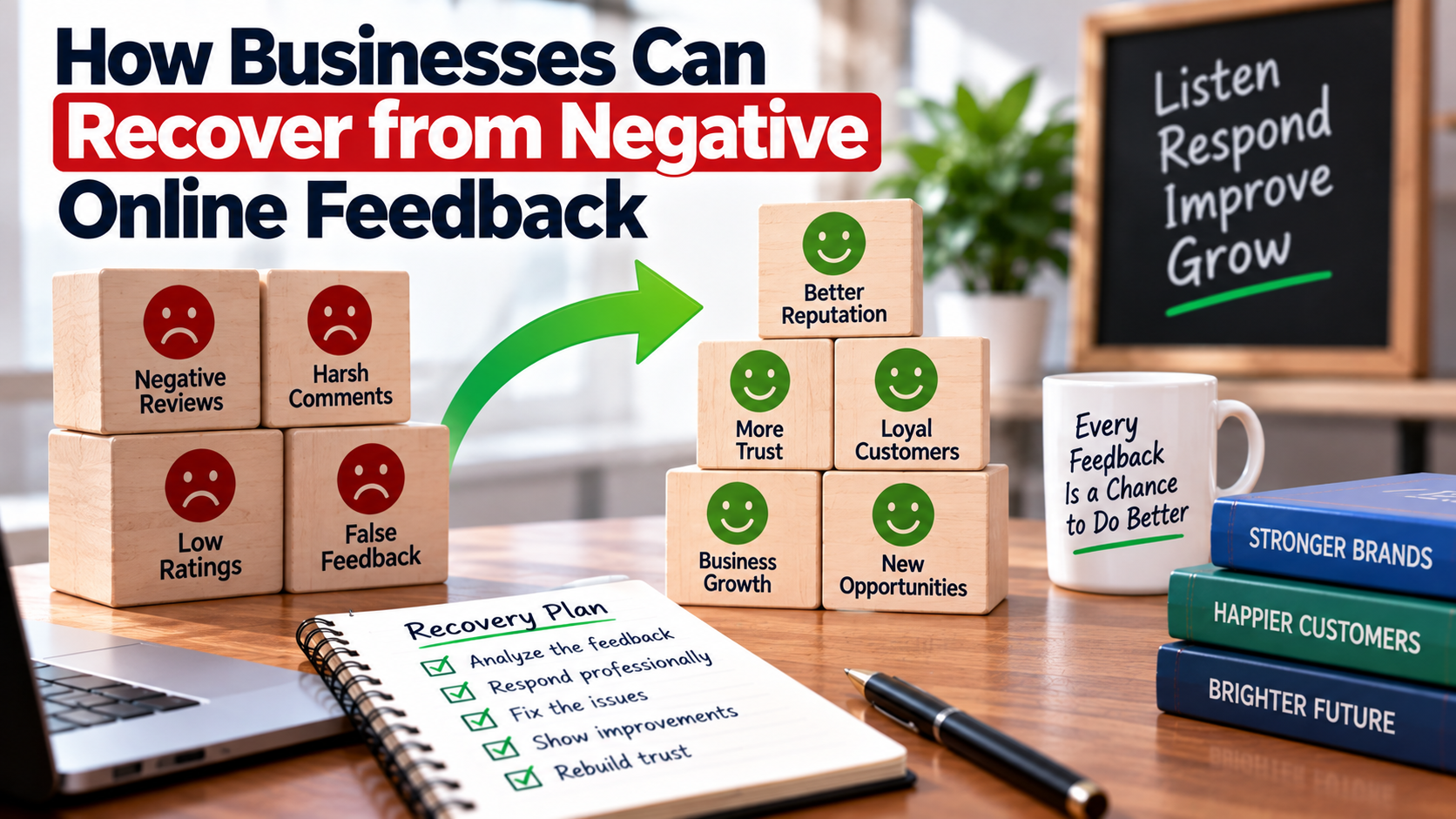
Negative online feedback is an inevitable part of running a business. Whether it appears as a critical review, a social media comment, or a public complaint, unfavorable feedback can influence how potential customers perceive your brand. However, negative feedback does not have to define your business. In many cases, the way you respond is more important than the criticism itself.
Businesses that handle feedback professionally, address legitimate concerns, and continuously improve their customer experience can strengthen trust and build a more resilient reputation. Rather than viewing criticism as a setback, successful companies use it as an opportunity to demonstrate accountability and commitment to customer satisfaction.
This guide explains how businesses can recover from negative online feedback while protecting their reputation and maintaining customer confidence.
Why Negative Online Feedback Matters
Today’s consumers often research businesses before making purchasing decisions.
Negative feedback can influence:
- Customer trust
- Purchase decisions
- Brand reputation
- Local search visibility
- Customer loyalty
- Referral opportunities
- Business growth
- Competitive positioning
Although one negative comment is unlikely to define your business, repeated unresolved issues can affect public perception.
Stay Calm Before Responding
Receiving criticism can be frustrating, but emotional responses often make the situation worse.
Before replying:
- Read the feedback carefully.
- Understand the concern.
- Verify the facts.
- Discuss the issue internally if necessary.
- Plan a professional response.
A calm and thoughtful approach reflects positively on your business.
Determine Whether the Feedback Is Genuine
Not all negative feedback is the same.
Consider whether the comment is:
- A genuine customer experience
- A misunderstanding
- A request for support
- Constructive criticism
- Spam
- A fake review
- Content that may violate platform policies
Understanding the nature of the feedback helps determine the appropriate response.
Respond Professionally
A respectful response shows that your business values customer feedback.
A good response should:
- Thank the customer for sharing their experience.
- Acknowledge their concerns.
- Apologize when appropriate.
- Explain any relevant facts without becoming defensive.
- Offer to continue the conversation privately if needed.
Professional communication often leaves a positive impression on future customers.
Address Legitimate Problems
If the feedback highlights a genuine issue, take action to resolve it.
This may include:
- Correcting mistakes
- Improving customer support
- Replacing defective products
- Updating internal processes
- Providing additional staff training
Resolving the root cause helps prevent similar issues in the future.
Learn From Customer Feedback
Negative feedback can reveal valuable insights.
Use it to identify opportunities to improve:
- Products
- Services
- Communication
- Delivery processes
- Customer support
- Overall customer experience
Continuous improvement strengthens your business over time.
Encourage Authentic Positive Reviews
A balanced review profile reflects the experiences of many customers.
After delivering excellent service, politely invite satisfied customers to leave honest feedback.
Avoid:
- Buying fake reviews
- Offering incentives solely for positive reviews
- Posting reviews yourself
- Pressuring customers to leave favorable ratings
Authentic reviews build long-term credibility.
Monitor Your Online Reputation
Regular monitoring helps businesses identify concerns early.
Keep track of:
- Google reviews
- Yelp reviews
- Social media mentions
- Industry review sites
- News articles
- Blogs
- Online forums
Early detection allows faster responses and better reputation management.
Improve Customer Service
Excellent customer service is one of the most effective ways to reduce future complaints.
Focus on:
- Prompt responses
- Friendly communication
- Clear expectations
- Consistent service quality
- Efficient problem resolution
Satisfied customers are more likely to become loyal advocates.
Maintain Accurate Business Information
Incorrect business details can create unnecessary customer frustration.
Ensure your:
- Business name
- Address
- Phone number
- Website
- Business hours
- Product information
- Service descriptions
remain accurate across all online platforms.
Build Strong Brand Authority
A strong reputation extends beyond customer reviews.
Strengthen your brand by:
- Publishing educational content
- Sharing industry expertise
- Earning media mentions
- Participating in community events
- Demonstrating thought leadership
Authority helps reinforce customer trust.
Use SEO to Strengthen Your Online Presence
Search engine optimization supports reputation management by increasing the visibility of accurate and valuable content.
Focus on:
- Helpful blog articles
- Updated website pages
- Technical SEO
- Internal linking
- Quality backlinks
Strong SEO helps ensure customers find reliable information about your business.
Know When to Report Content
If feedback appears to violate a platform’s policies—for example, if it contains spam, harassment, impersonation, or fake claims—you may use the platform’s reporting process.
Remember that:
- Not all negative reviews violate platform guidelines.
- Reporting a review does not guarantee its removal.
- Platforms make removal decisions based on their published policies.
Always follow the reporting procedures provided by the relevant platform.
Avoid Common Mistakes
Businesses should avoid:
- Responding emotionally
- Ignoring customer concerns
- Arguing publicly
- Buying fake reviews
- Deleting legitimate criticism from their own channels without explanation
- Making unsupported accusations
- Delaying responses
Professionalism is essential during every interaction.
Create a Long-Term Reputation Strategy
Recovering from negative feedback requires ongoing effort.
Your strategy should include:
- Regular reputation monitoring
- Review management
- Customer engagement
- Quality content creation
- SEO improvement
- Social media management
- Employee training
- Continuous service improvement
Consistency is the key to long-term success.
Benefits of Handling Negative Feedback Well
Businesses that manage criticism effectively often experience:
- Greater customer trust
- Improved brand credibility
- Better customer retention
- Increased positive reviews
- Stronger online reputation
- Higher customer satisfaction
- Better search visibility
- Sustainable business growth
Thoughtful responses can turn difficult situations into opportunities for improvement.
Conclusion
Negative online feedback is a natural part of doing business, but it does not have to damage your brand permanently. By responding professionally, resolving legitimate concerns, learning from customer feedback, and maintaining a proactive reputation management strategy, businesses can strengthen customer trust and demonstrate their commitment to continuous improvement.
Rather than focusing solely on removing criticism, successful organizations prioritize excellent customer service, transparent communication, authentic reviews, and ongoing reputation monitoring. Over time, these efforts help build a trusted brand that can withstand occasional negative feedback and continue to grow.
Frequently Asked Questions (FAQs)
Can a business recover from negative online feedback?
Yes. Many businesses recover successfully by responding professionally, resolving customer concerns, improving their services, and maintaining a strong overall online reputation.
Should businesses respond to every negative review?
Whenever practical, businesses should respond respectfully to genuine customer feedback. Professional responses demonstrate accountability and a willingness to address concerns.
Can negative feedback improve a business?
Yes. Constructive criticism can identify opportunities to improve products, services, customer support, and internal processes, leading to better customer experiences.
What if a review is fake or violates platform policies?
If a review appears to violate a platform’s guidelines, businesses can report it through the platform’s official reporting process. The platform will determine whether the content should be removed.
How can businesses encourage more positive reviews?
The best approach is to provide excellent customer service and politely ask satisfied customers to share honest feedback after a positive experience.
Does SEO help with reputation recovery?
Yes. Publishing high-quality content, maintaining an optimized website, and improving search visibility can help customers find accurate and trustworthy information about your business.
What is the most important step in recovering from negative online feedback?
The most important step is to respond professionally, address legitimate concerns, learn from customer feedback, and consistently deliver a positive customer experience over time.
Leave a Reply