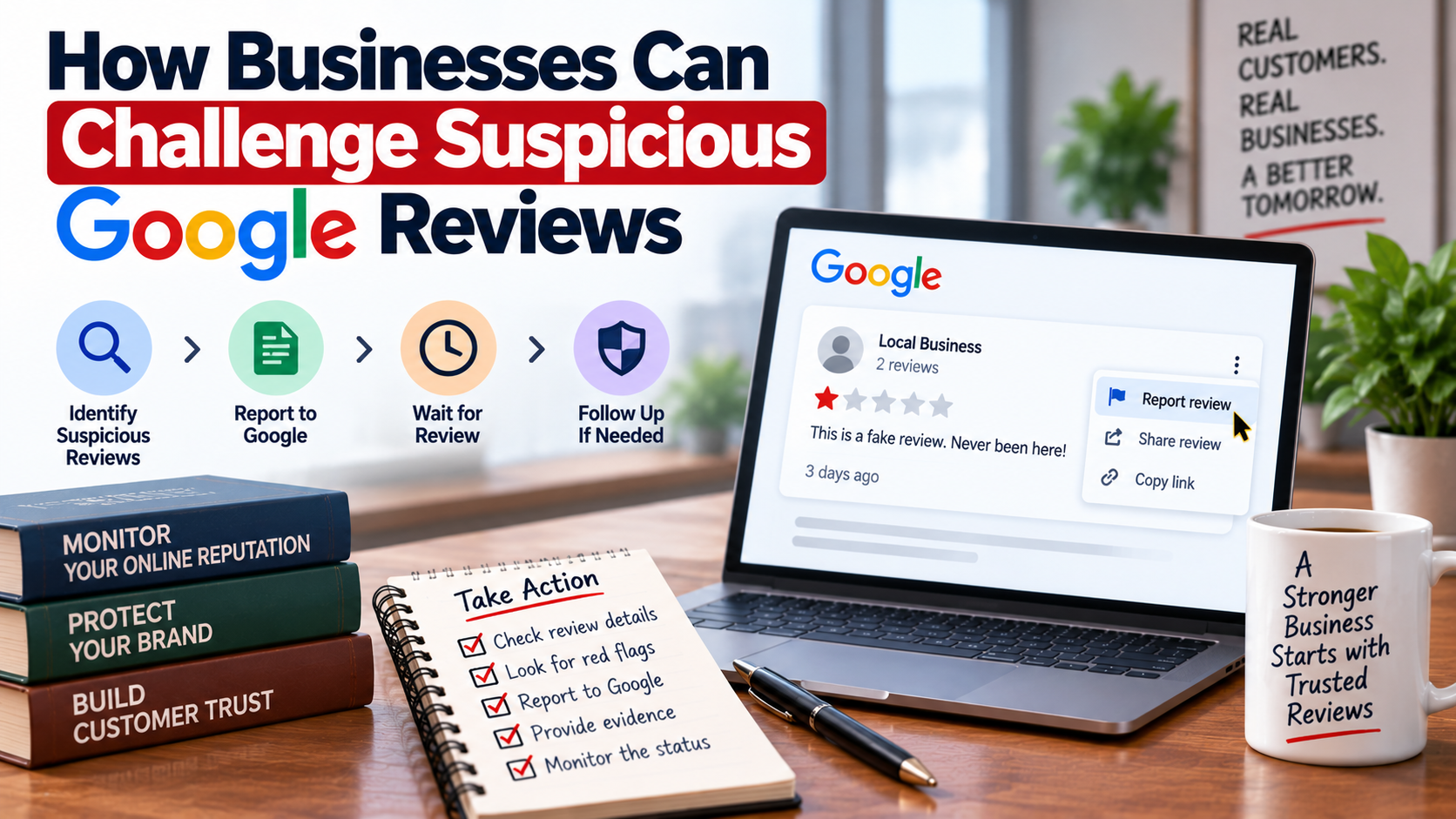
Google Reviews are one of the first things potential customers see when they search for a business. Reviews influence purchasing decisions, build customer trust, and contribute to local search visibility. While most reviews represent genuine customer experiences, businesses may occasionally encounter reviews that appear suspicious or inconsistent with Google’s review policies.
A suspicious review is not automatically a fake review, and not every unfavorable review violates Google’s guidelines. Businesses should carefully evaluate questionable reviews before taking action. Understanding Google’s review process and responding professionally can help protect your online reputation while maintaining customer trust.
This guide explains how businesses can challenge suspicious Google reviews, what qualifies as a policy violation, and the best practices for managing online feedback responsibly.
What Is a Suspicious Google Review?
A suspicious review is one that raises concerns about its authenticity or compliance with Google’s review policies.
Examples may include:
- Reviews from individuals who were not genuine customers
- Spam or promotional content
- Reviews containing false factual claims
- Reviews posted by competitors
- Conflicts of interest
- Duplicate reviews
- Impersonation
- Reviews unrelated to an actual customer experience
Suspicion alone does not mean a review violates Google’s policies.
Verify the Review First
Before reporting a review, carefully evaluate it.
Consider questions such as:
- Does the reviewer appear to be a genuine customer?
- Is the review related to your business?
- Does it contain factual inaccuracies?
- Does it violate Google’s published review policies?
- Could it be based on a misunderstanding?
Taking time to verify the situation helps avoid unnecessary reports.
Understand Google’s Review Policies
Google allows businesses to report reviews that violate its policies.
Examples of prohibited content may include:
- Spam
- Fake reviews
- Harassment
- Hate speech
- Threats
- Impersonation
- Explicit content
- Reviews unrelated to a customer experience
Negative opinions alone are generally not grounds for removal.
Gather Supporting Information
If you believe a review violates Google’s policies, collect relevant information before submitting a report.
This may include:
- Screenshots of the review
- The review date
- The reviewer’s username
- Relevant business records
- Other information that may help explain your concern
Maintaining accurate records supports an organized review process.
Report the Review
Google provides a reporting process for reviews that may violate its policies.
When submitting a report:
- Select the most appropriate reporting reason.
- Provide accurate information.
- Follow Google’s reporting instructions.
- Avoid making unsupported claims.
Submitting a report requests a review but does not guarantee removal.
Be Patient During the Review Process
After a review is reported, Google evaluates it using its moderation systems.
The review process may involve:
- Automated analysis
- Policy evaluation
- Account activity review
- Human review in certain situations
The time required can vary depending on the circumstances.
Respond Professionally
While the review is being evaluated, consider posting a professional public response if appropriate.
A constructive response should:
- Thank the reviewer for their feedback.
- Clarify any misunderstandings respectfully.
- Invite further discussion privately.
- Avoid emotional language.
- Demonstrate commitment to customer satisfaction.
Professional responses often reassure future customers.
Continue Encouraging Authentic Reviews
One suspicious review should not become the focus of your reputation strategy.
Continue building a strong review profile by:
- Delivering excellent customer service
- Asking satisfied customers for honest reviews
- Making the review process convenient
- Responding consistently to customer feedback
A steady stream of authentic reviews provides valuable balance.
Monitor Your Google Business Profile
Regular monitoring helps businesses detect unusual activity early.
Monitor:
- New reviews
- Customer questions
- Rating changes
- Business information
- Review trends
Early awareness supports faster responses.
Improve Customer Communication
Some review disputes arise from misunderstandings.
Businesses can reduce confusion by providing:
- Clear pricing
- Accurate business information
- Transparent policies
- Responsive customer support
- Prompt issue resolution
Strong communication often prevents future complaints.
Avoid Review Manipulation
Businesses should never attempt to influence Google’s review system through unethical practices.
Avoid:
- Buying fake reviews
- Posting reviews about your own business
- Asking employees to submit misleading reviews
- Offering rewards solely for positive reviews
- Coordinating mass review campaigns
Violating platform policies may damage your credibility.
Learn From Genuine Feedback
Not every critical review is suspicious.
Legitimate feedback may reveal opportunities to improve:
- Customer service
- Products
- Communication
- Delivery processes
- Overall customer experience
Using customer insights helps strengthen your business.
Common Misunderstandings
Several myths surround suspicious Google reviews.
Common misconceptions include:
- Every negative review is fake.
- Reporting guarantees removal.
- Businesses can delete reviews themselves.
- Multiple reports automatically remove reviews.
- Low ratings always violate Google’s policies.
Understanding Google’s moderation process helps businesses maintain realistic expectations.
Create a Long-Term Reputation Strategy
Protecting your reputation requires consistent effort.
An effective strategy includes:
- Reputation monitoring
- Professional review responses
- Excellent customer service
- Quality content creation
- Local SEO
- Accurate business listings
- Customer engagement
- Continuous improvement
Long-term consistency is more effective than reacting to isolated incidents.
Benefits of Ethical Reputation Management
Businesses that manage reviews responsibly often experience:
- Higher customer trust
- Better online reputation
- Improved local search visibility
- Increased customer loyalty
- Stronger brand credibility
- Better customer engagement
- More balanced review profiles
- Sustainable business growth
Trust is built through transparency and authenticity.
Conclusion
Suspicious Google reviews can be concerning, but businesses should approach them carefully and professionally. Before reporting a review, it is important to determine whether it genuinely violates Google’s review policies or simply reflects a customer’s negative experience. Reporting should be based on evidence and compliance with Google’s guidelines rather than disagreement with the review itself.
The most effective long-term approach combines ethical review management, excellent customer service, regular reputation monitoring, and authentic customer engagement. By focusing on transparency and consistent customer satisfaction, businesses can build a resilient online reputation that is better equipped to withstand occasional suspicious or unfair reviews.
Frequently Asked Questions (FAQs)
What is considered a suspicious Google review?
A suspicious review may include spam, fake customer experiences, impersonation, conflicts of interest, or other content that appears to violate Google’s review policies.
Can businesses remove suspicious Google reviews themselves?
No. Businesses cannot directly remove reviews. They can report reviews they believe violate Google’s policies, and Google determines whether any action is appropriate.
Does reporting a suspicious review guarantee removal?
No. Reporting a review does not guarantee its removal. Google evaluates each report individually based on its published review policies.
Should businesses respond to suspicious reviews?
If appropriate, a professional and respectful response can demonstrate accountability, clarify misunderstandings, and reassure potential customers while the review is being evaluated.
How can businesses reduce the impact of suspicious reviews?
Providing excellent customer service, encouraging authentic customer feedback, monitoring reviews regularly, and maintaining a strong overall review profile can help reduce the influence of isolated suspicious reviews.
Are all negative Google reviews fake?
No. Many negative reviews reflect genuine customer experiences. Businesses should distinguish between legitimate criticism and reviews that may violate Google’s policies.
What is the best long-term strategy for protecting a Google review profile?
The most effective strategy is to consistently deliver excellent customer experiences, encourage honest reviews, monitor your Google Business Profile, respond professionally to feedback, and follow Google’s review guidelines.
Leave a Reply