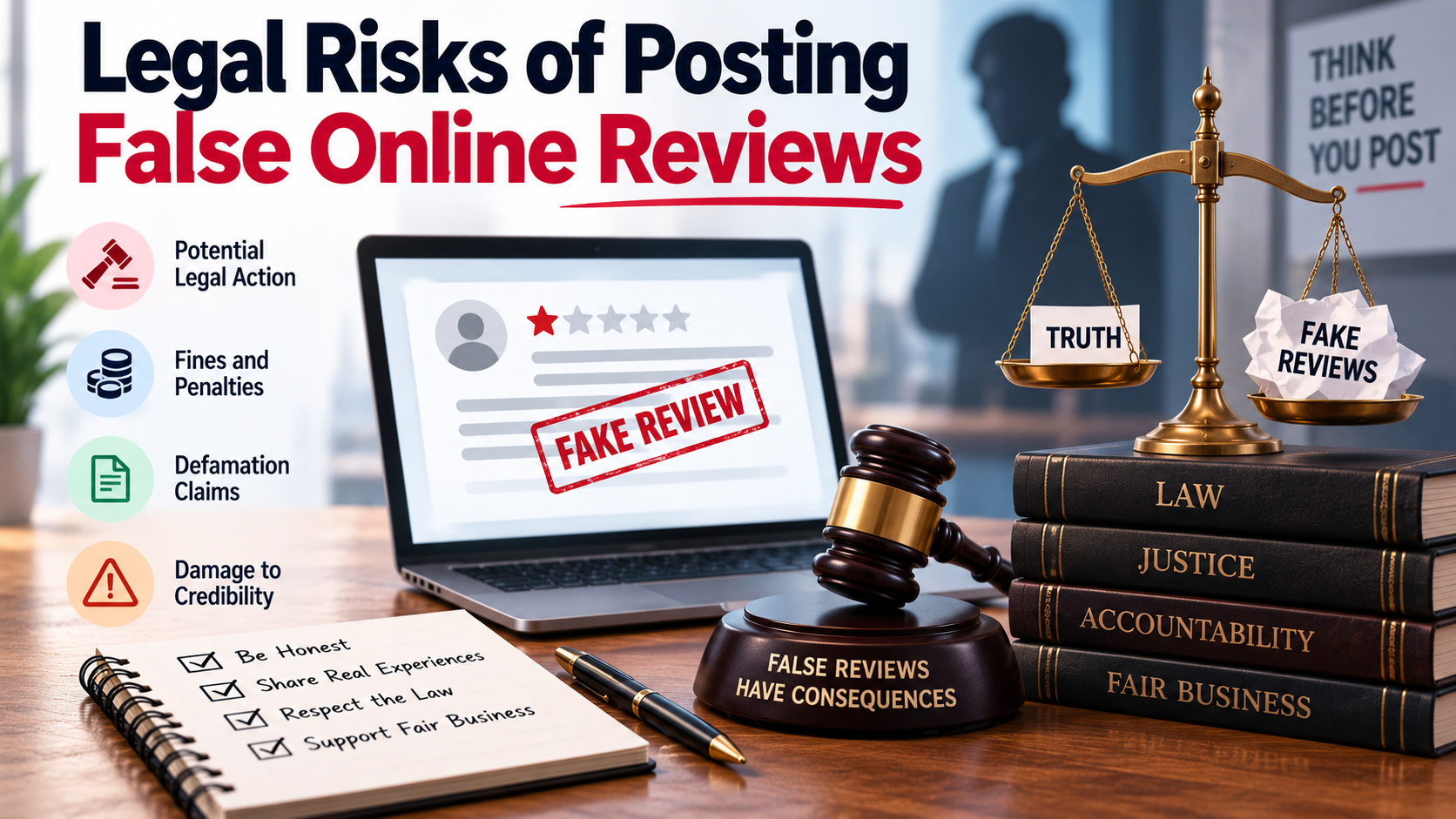
Online reviews influence purchasing decisions, shape public opinion, and play a major role in building or damaging a business’s reputation. Consumers rely on reviews to evaluate products, services, employers, and local businesses before making important decisions. Because reviews have such a significant impact, knowingly posting false or misleading reviews can create legal and reputational risks.
While honest opinions and genuine customer experiences are generally protected in many jurisdictions, deliberately publishing false factual claims, impersonating customers, or participating in deceptive review practices may violate laws, consumer protection regulations, platform policies, or expose individuals and businesses to legal disputes.
This guide explains the legal risks associated with posting false online reviews and why honesty and transparency are essential for maintaining trust.
Why Honest Reviews Matter
Review platforms exist to help consumers make informed decisions based on authentic experiences.
Honest reviews help:
- Build consumer trust
- Improve business transparency
- Encourage fair competition
- Support informed purchasing decisions
- Reward quality service
- Promote accountability
- Strengthen marketplace integrity
- Protect consumers from deception
False reviews undermine these goals and reduce confidence in online review systems.
What Is a False Online Review?
A false online review generally involves content that intentionally misrepresents facts or creates a misleading impression about a business, product, service, or individual.
Examples may include:
- Claiming to be a customer when no transaction occurred
- Fabricating negative experiences
- Posting fake positive reviews
- Misrepresenting products or services
- Impersonating another individual
- Coordinating deceptive review campaigns
- Publishing knowingly false factual statements
- Using multiple fake accounts to influence ratings
Not every inaccurate review is intentionally false. Honest mistakes and personal opinions are different from deliberate deception.
False Facts vs. Personal Opinions
Many legal systems distinguish between opinions and factual statements.
For example:
Opinion:
- “I didn’t enjoy the service.”
Potential factual claim:
- “This company steals customer money.”
Opinions generally express personal experiences or viewpoints, while false factual allegations may create greater legal risk if they are presented as facts without a truthful basis.
Defamation Risks
False reviews that make damaging factual allegations about a business or individual may, depending on the jurisdiction and specific circumstances, give rise to defamation claims.
Potentially risky statements could include false allegations of:
- Criminal conduct
- Fraud
- Professional misconduct
- Illegal business practices
- Safety violations
- Financial deception
Whether a statement is legally defamatory depends on applicable law, the facts of the case, and available evidence.
Consumer Protection Laws
Many countries have consumer protection laws that prohibit deceptive commercial practices.
These laws may apply to:
- Fake positive reviews
- Paid reviews without proper disclosure
- Misleading endorsements
- Coordinated review manipulation
- Deceptive advertising practices
Regulators in some jurisdictions may investigate businesses that engage in deceptive review practices.
Breach of Platform Policies
Most review platforms prohibit content such as:
- Fake reviews
- Spam
- Impersonation
- Conflicts of interest
- Review manipulation
- Coordinated review campaigns
- Misleading content
Violating platform policies may result in moderation actions, including review removal or restrictions on user accounts.
Damage to Business Reputation
False reviews can significantly affect businesses by:
- Reducing customer trust
- Lowering review ratings
- Decreasing sales opportunities
- Damaging brand credibility
- Discouraging potential employees
- Influencing business partnerships
Even when false reviews are eventually removed, they may still create temporary reputational harm.
Risks for Businesses Posting Fake Reviews
Businesses themselves face risks if they publish or encourage false reviews.
Examples include:
- Posting reviews about their own business
- Asking employees to write undisclosed positive reviews
- Posting fake reviews about competitors
- Purchasing fabricated reviews
- Using fake customer accounts
Such practices may violate platform rules and, depending on the jurisdiction, applicable advertising or consumer protection laws.
Risks for Individuals
Individuals who post knowingly false reviews may face consequences such as:
- Account suspension
- Review removal
- Legal disputes
- Damage to personal credibility
- Loss of professional reputation
- Platform restrictions
The specific consequences vary depending on the platform and applicable laws.
How Businesses Should Respond to False Reviews
If a business believes a review contains false factual claims or violates platform policies, appropriate steps may include:
- Reviewing the content carefully
- Comparing the review with business records
- Reporting the review through the platform’s official process
- Responding professionally when appropriate
- Seeking legal advice if serious allegations are involved
Businesses should avoid responding emotionally or making unsupported accusations.
Encourage Authentic Customer Feedback
The best defense against false reviews is a strong collection of genuine customer feedback.
Businesses should:
- Deliver excellent customer service
- Invite honest reviews
- Make the review process simple
- Respond professionally to feedback
- Follow platform guidelines
Authentic reviews strengthen long-term credibility.
Monitor Your Online Reputation
Regular monitoring helps businesses identify concerning content quickly.
Monitor:
- Review platforms
- Search engine results
- Social media mentions
- Business directories
- News coverage
- Industry forums
Early detection supports timely and appropriate action.
Avoid Common Mistakes
Businesses and individuals should avoid:
- Posting fake reviews
- Buying positive reviews
- Publishing false accusations
- Using anonymous fake accounts
- Coordinating review manipulation
- Making misleading statements
Ethical conduct supports long-term trust.
Build Trust Through Transparency
The strongest online reputations are built through transparency and consistent customer satisfaction.
Focus on:
- Honest communication
- Ethical marketing
- Excellent customer service
- Accurate business information
- Genuine customer engagement
- Continuous improvement
Trust is difficult to earn and easy to lose.
Benefits of Honest Review Practices
Businesses and consumers benefit when reviews remain authentic.
Advantages include:
- Greater consumer confidence
- Better purchasing decisions
- Improved marketplace fairness
- Stronger brand credibility
- More reliable review platforms
- Higher customer loyalty
- Sustainable business growth
- Increased public trust
Authenticity benefits everyone involved.
Conclusion
False online reviews can create significant legal, ethical, and reputational risks for both individuals and businesses. While honest opinions and genuine customer experiences are generally permitted, knowingly publishing false factual claims, impersonating customers, or engaging in deceptive review practices may violate platform policies and, depending on the jurisdiction, applicable laws.
The most effective long-term strategy is to prioritize honesty, transparency, and ethical business practices. Businesses should encourage authentic customer feedback, respond professionally to criticism, monitor their online reputation regularly, and address concerns through appropriate platform processes. Building trust through genuine customer experiences remains the most sustainable approach to protecting a positive online reputation.
Frequently Asked Questions (FAQs)
What is considered a false online review?
A false online review generally contains intentionally misleading or fabricated information, such as claiming to be a customer without having used the business or making knowingly false factual statements.
Are negative reviews illegal?
No. Genuine negative reviews based on honest customer experiences are generally allowed. Legal concerns are more likely to arise when reviews contain knowingly false factual claims or violate applicable laws or platform policies.
Can posting a false review lead to legal consequences?
Depending on the jurisdiction and the circumstances, knowingly posting false reviews may lead to legal disputes, consumer protection issues, or other legal consequences, particularly if the review contains false factual allegations.
Can businesses post reviews about themselves?
Most review platforms prohibit businesses from posting reviews about their own products or services or encouraging misleading reviews from employees or affiliated individuals.
What should a business do if it receives a false review?
A business should review the content carefully, determine whether it may violate the platform’s policies, report it through the platform’s official process if appropriate, respond professionally when suitable, and seek legal advice if serious false allegations are involved.
Why are fake reviews harmful?
Fake reviews reduce consumer trust, distort purchasing decisions, damage business reputations, and undermine the reliability of online review platforms.
What is the best way to maintain a trustworthy online reputation?
The most effective approach is to provide excellent customer service, encourage authentic customer feedback, respond respectfully to reviews, monitor your online presence regularly, and maintain honest and ethical business practices.
Leave a Reply