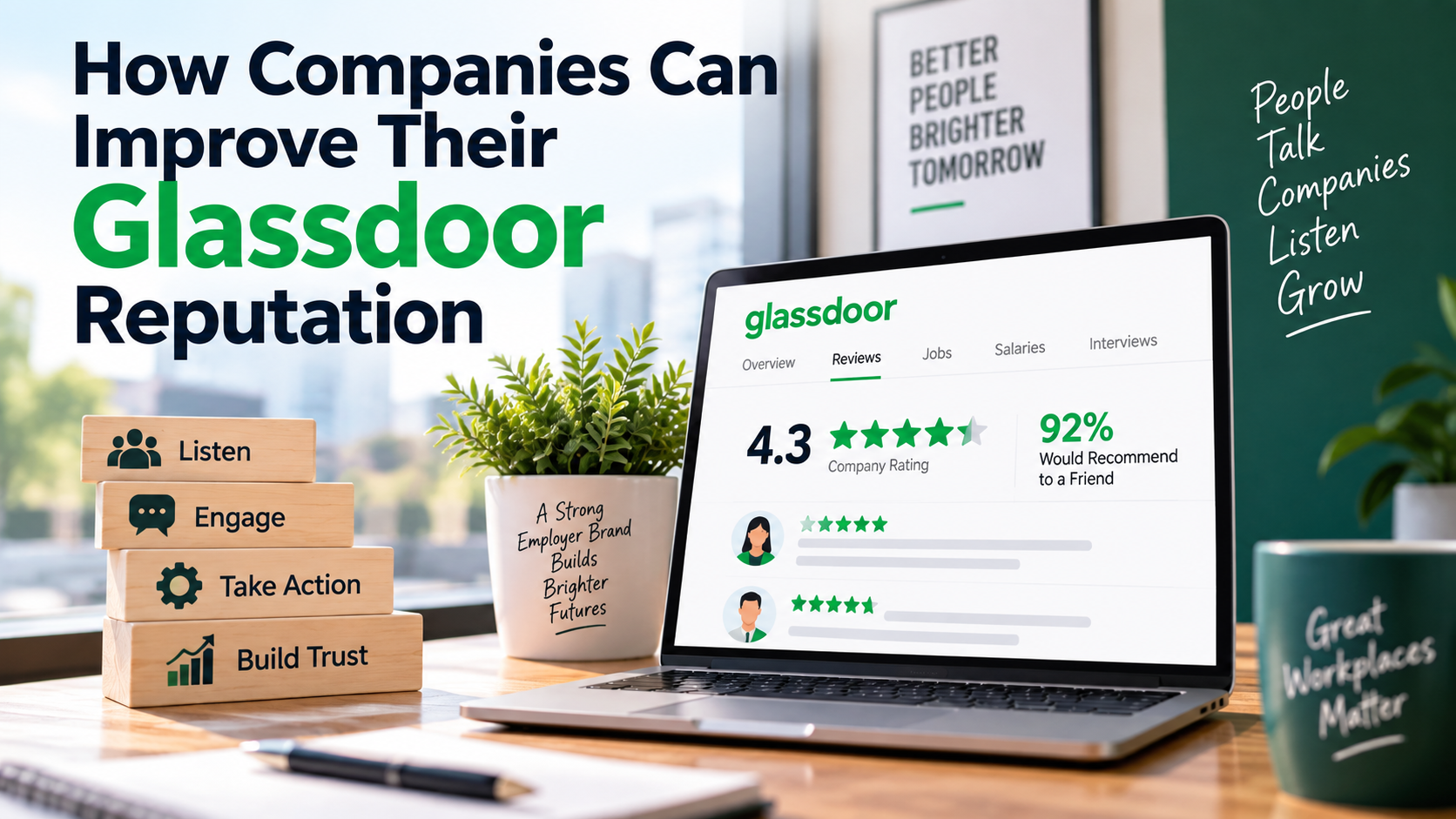
In today’s competitive hiring environment, an organization’s online reputation plays an important role in attracting and retaining talented employees. Job seekers often research companies before applying, and platforms like Glassdoor provide insights into workplace culture, leadership, compensation, career growth, and employee experiences.
A strong Glassdoor reputation does not come from removing negative feedback or controlling employee opinions. It comes from creating a workplace where employees feel valued, supported, and motivated to share genuine positive experiences. Companies that actively listen to employees, improve workplace practices, and communicate transparently are more likely to build trust with future candidates.
This guide explains practical strategies companies can use to improve their Glassdoor reputation and strengthen their employer brand.
Why Glassdoor Reputation Matters
Glassdoor reviews influence how potential employees view an organization.
A positive employer reputation can help companies:
- Attract high-quality candidates
- Improve recruitment performance
- Build employer credibility
- Increase employee confidence
- Strengthen company culture
- Reduce hiring challenges
- Improve employee retention
- Stand out from competitors
Candidates often consider employee feedback as part of their decision-making process.
Understand Your Current Reputation
Before improving your Glassdoor presence, companies should understand how employees and candidates currently perceive the organization.
Review:
- Overall company rating
- Recent employee feedback
- Common complaints
- Frequently mentioned strengths
- Leadership feedback
- Interview experiences
- Salary and benefits discussions
Identifying patterns helps companies focus improvement efforts on areas that matter most.
Focus on Employee Experience
The foundation of a strong Glassdoor reputation is a positive workplace experience.
Companies should prioritize:
- Supportive leadership
- Fair workplace policies
- Career development opportunities
- Recognition programs
- Work-life balance
- Employee well-being
- Clear communication
Positive employee experiences naturally create stronger reviews.
Improve Leadership Communication
Leadership has a major influence on employee satisfaction.
Employees value leaders who:
- Communicate clearly
- Share company goals
- Listen to feedback
- Recognize employee contributions
- Address concerns respectfully
Strong leadership communication often appears in employee reviews.
Encourage Honest Employee Feedback
Companies should encourage employees to share their genuine experiences.
Good practices include:
- Creating open feedback channels
- Conducting employee surveys
- Holding regular discussions
- Encouraging transparent communication
Businesses should never pressure employees to leave positive reviews or attempt to influence ratings.
Authentic feedback is more valuable than artificially high ratings.
Respond Professionally to Reviews
A thoughtful employer response can influence how candidates view the company.
Professional responses should:
- Thank employees for feedback
- Acknowledge concerns
- Highlight improvements
- Maintain confidentiality
- Show commitment to workplace growth
Future candidates often evaluate how companies handle criticism.
Address Common Employee Concerns
Negative reviews can reveal areas where improvement is needed.
Common workplace concerns include:
- Poor communication
- Limited career growth
- Management challenges
- Workload issues
- Lack of recognition
- Compensation concerns
Companies should analyze recurring themes and take meaningful action.
Improve the Interview Experience
Glassdoor includes feedback from job candidates about interviews.
A poor interview experience can affect employer reputation.
Companies can improve by:
- Providing clear communication
- Setting realistic expectations
- Respecting candidate time
- Offering timely updates
- Training interviewers
A positive candidate experience strengthens employer branding.
Strengthen Workplace Culture
Company culture influences employee satisfaction and online reputation.
Strong workplace cultures often include:
- Respectful communication
- Team collaboration
- Inclusion
- Recognition
- Professional growth
- Employee support
Culture is reflected in employee feedback.
Provide Career Growth Opportunities
Employees often value opportunities to develop professionally.
Companies can support growth through:
- Training programs
- Mentorship
- Skill development
- Internal promotions
- Career planning
Growth opportunities contribute to employee satisfaction.
Recognize Employee Contributions
Employees want to feel that their work matters.
Recognition can include:
- Appreciation programs
- Performance feedback
- Career advancement
- Team celebrations
- Leadership acknowledgment
Recognition strengthens employee engagement.
Maintain Transparency
Trust grows when companies communicate openly.
Transparency includes:
- Clear policies
- Honest updates
- Defined expectations
- Open discussions about changes
Transparent organizations often build stronger employee relationships.
Monitor Glassdoor Regularly
Reputation management requires ongoing attention.
Companies should monitor:
- New reviews
- Rating trends
- Employee comments
- Interview feedback
- Competitor employer profiles
Regular monitoring helps identify issues early.
Avoid Manipulating Reviews
Companies should avoid practices that damage credibility.
Do not:
- Create fake employee accounts
- Purchase positive reviews
- Pressure employees to leave reviews
- Ask employees to hide negative experiences
- Respond aggressively to criticism
Manipulation can create greater reputation problems.
Build a Strong Employer Brand
Glassdoor reputation is connected to overall employer branding.
Companies can strengthen their brand through:
- Employee success stories
- Professional content
- Career pages
- Social media communication
- Workplace achievements
- Community involvement
A consistent employer identity builds trust.
Use Reviews as Improvement Opportunities
Every review provides information.
Companies can use feedback to:
- Identify workplace challenges
- Improve policies
- Enhance employee engagement
- Strengthen leadership practices
- Create better employee experiences
Listening is a key part of reputation improvement.
Benefits of a Strong Glassdoor Reputation
Companies with a positive employer reputation often experience:
- Easier recruitment
- Higher candidate trust
- Stronger employee loyalty
- Improved retention
- Better workplace perception
- Competitive hiring advantages
- Stronger employer branding
- Long-term business growth
A respected employer brand supports organizational success.
Common Mistakes Companies Should Avoid
Avoid:
- Ignoring employee concerns
- Responding defensively
- Focusing only on ratings
- Trying to remove every negative review
- Making promises without action
- Treating reviews as attacks
Sustainable improvement requires genuine commitment.
Conclusion
Improving a Glassdoor reputation requires more than managing online reviews. The strongest employer brands are built through positive workplace experiences, transparent communication, effective leadership, and genuine employee engagement.
Companies should view Glassdoor feedback as a valuable source of insight rather than simply a reputation challenge. By addressing employee concerns, encouraging honest feedback, responding professionally, and continuously improving workplace culture, organizations can build trust with both current employees and future candidates.
A strong Glassdoor reputation is the result of a strong workplace. When employees feel respected, supported, and valued, positive employer reputation follows naturally.
Frequently Asked Questions (FAQs)
How can companies improve their Glassdoor rating?
Companies can improve their Glassdoor reputation by creating a positive workplace culture, improving employee experience, addressing concerns, encouraging honest feedback, and responding professionally to reviews.
Can companies remove negative Glassdoor reviews?
Companies cannot remove reviews simply because they are negative. They can report reviews that violate Glassdoor’s guidelines, but genuine employee opinions generally remain visible.
Should companies ask employees to leave Glassdoor reviews?
Companies can encourage employees to share honest feedback but should never pressure employees to leave positive reviews or influence what they write.
Do Glassdoor reviews affect hiring?
Yes. Many candidates use employer reviews as one factor when evaluating job opportunities, company culture, and workplace expectations.
How should companies respond to negative Glassdoor reviews?
Companies should respond professionally by acknowledging feedback, avoiding defensive language, addressing concerns where appropriate, and demonstrating commitment to improvement.
What matters more than a high Glassdoor rating?
A strong workplace culture, employee trust, leadership quality, career growth opportunities, and consistent employee experiences matter more than achieving a specific rating.
How long does it take to improve a Glassdoor reputation?
Improving an employer reputation takes time. Companies must consistently improve workplace practices, engage employees, and demonstrate positive changes over months and years.
Leave a Reply