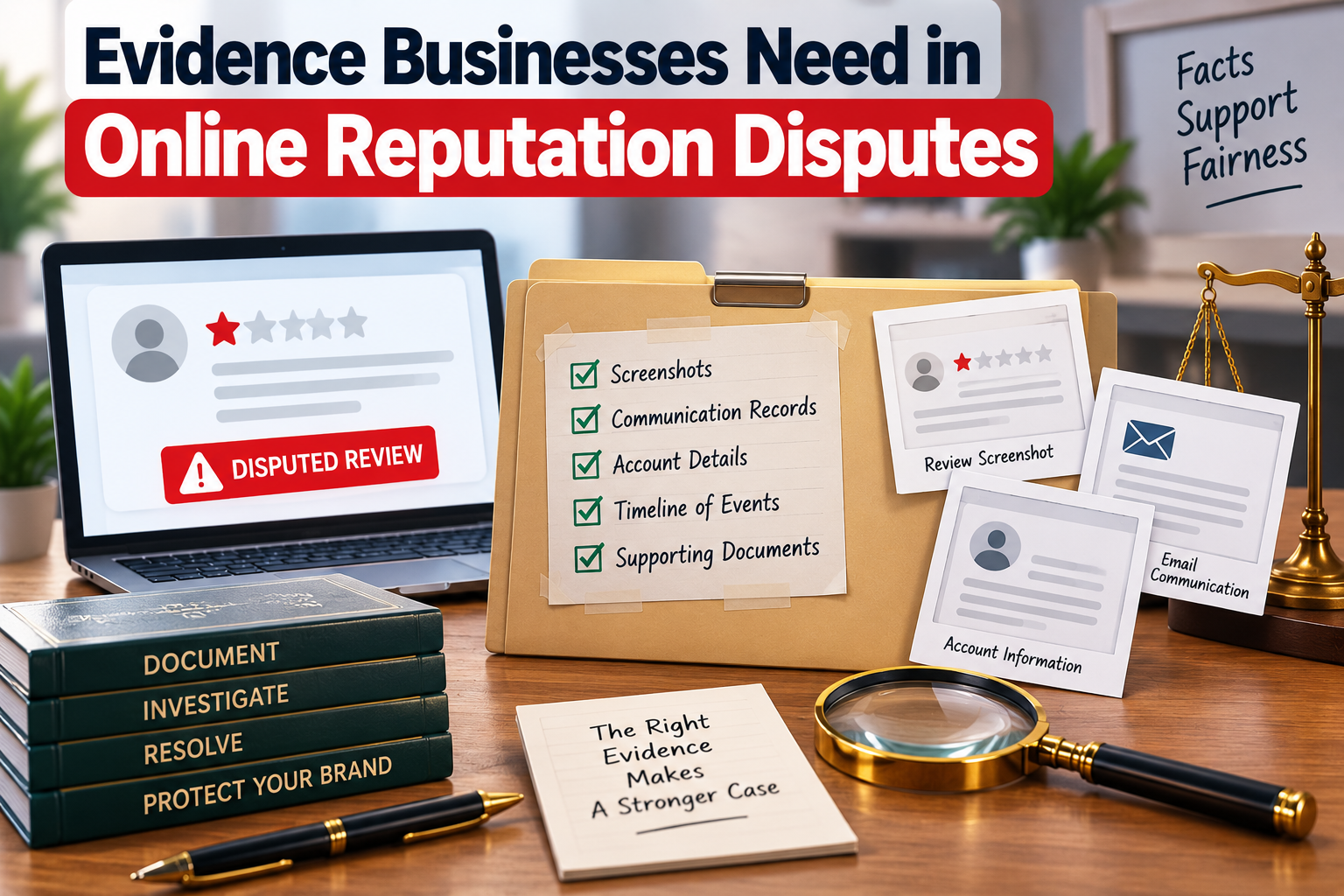
Online reputation disputes can arise when businesses face false reviews, misleading online content, impersonation, defamatory statements, or other information that may negatively affect public perception. Whether the issue involves a review platform, a social media post, a blog article, or another online source, having accurate and organized evidence is often essential when reporting content, responding to complaints, or seeking professional legal advice.
Evidence helps establish the facts surrounding a dispute and supports a business’s position during discussions with review platforms, website operators, or legal professionals. While the type of evidence required varies depending on the situation, maintaining clear documentation is one of the most effective ways to manage online reputation challenges.
This guide explains the types of evidence businesses should consider preserving and how organized records can support responsible reputation management.
Why Evidence Matters
Good evidence helps businesses:
- Support factual claims
- Clarify disputed events
- Respond to customer complaints
- Report policy-violating content
- Protect brand credibility
- Resolve disputes more efficiently
- Maintain accurate records
- Support legal consultations when necessary
Well-organized documentation often makes reputation management more effective.
Capture Screenshots
One of the first steps in any online reputation dispute is preserving the content before it changes or is removed.
Useful screenshots may include:
- Reviews
- Social media posts
- Blog articles
- Search results
- Comments
- User profiles
- Business listings
- Public discussions
Screenshots should clearly show the content, date if available, and the webpage where it appeared.
Record Dates and Times
Maintaining a timeline helps establish when events occurred.
Record:
- Publication dates
- Review dates
- Reporting dates
- Customer interactions
- Response times
- Follow-up communications
A clear timeline makes it easier to understand the sequence of events.
Preserve Business Records
Internal records can help verify whether a reviewer or complainant had a genuine interaction with your business.
Examples include:
- Purchase records
- Service invoices
- Appointment schedules
- Booking confirmations
- Customer support tickets
- Delivery records
- Contracts
- Order histories
Only use records in accordance with applicable privacy laws and avoid sharing confidential customer information publicly.
Save Communications
Retain relevant communications that relate to the dispute.
Examples include:
- Emails
- Customer support messages
- Live chat transcripts
- Contact forms
- Complaint records
- Follow-up correspondence
These records may help explain the context of a disagreement.
Document Platform Reports
If you report content to a review platform or website, keep copies of:
- Report confirmation emails
- Reference numbers
- Case IDs
- Platform responses
- Appeal submissions
- Follow-up communications
These documents help track the progress of your request.
Collect Publicly Available Information
In some cases, publicly available information may help explain the context of a dispute.
Examples include:
- Business listings
- Public company information
- Published policies
- Terms of service
- Community guidelines
- Official announcements
Use only publicly available information and avoid collecting personal information improperly.
Identify Policy Violations
If you believe content violates a platform’s rules, identify which policy may apply.
Potential examples include:
- Spam
- Fake reviews
- Impersonation
- Harassment
- Hate speech
- Threats
- Disclosure of confidential information
- Content unrelated to actual customer experiences
Referring to the relevant platform policy may strengthen a report.
Preserve Original Files
When possible, keep original versions of:
- Images
- Videos
- Audio recordings
- Documents
- Emails
Original files may contain useful metadata and are generally preferable to edited versions.
Maintain an Evidence Log
Create a central record that includes:
- Description of the issue
- Date of discovery
- Evidence collected
- Actions taken
- Reports submitted
- Responses received
- Current status
A structured log makes ongoing reputation management more efficient.
Protect Customer Privacy
Evidence should always be collected and stored responsibly.
Businesses should:
- Protect confidential information
- Follow applicable privacy laws
- Limit access to sensitive records
- Avoid publishing private customer information
- Store documents securely
Respecting privacy helps maintain customer trust.
Know When to Seek Professional Advice
Some reputation disputes involve serious allegations or complex legal issues.
Professional advice may be appropriate if the dispute involves:
- False allegations of criminal conduct
- Serious claims of fraud
- Intellectual property concerns
- Impersonation
- Significant reputational harm
- Potential legal proceedings
A qualified legal professional can advise on the applicable laws and evidence requirements.
Monitor Your Online Reputation
Regular monitoring helps businesses identify issues before they escalate.
Monitor:
- Search engine results
- Review platforms
- Social media
- News websites
- Industry forums
- Business directories
Early detection often makes evidence collection easier.
Build a Strong Reputation Proactively
The strongest defense against reputation disputes is a trusted online presence.
Focus on:
- Excellent customer service
- Authentic customer reviews
- Transparent communication
- Helpful content
- Accurate business information
- Consistent branding
A strong reputation can reduce the impact of isolated disputes.
Common Mistakes to Avoid
Businesses should avoid:
- Deleting evidence
- Altering screenshots
- Sharing confidential customer information publicly
- Making unsupported accusations
- Responding emotionally
- Ignoring documentation
Accurate and complete records are more valuable than assumptions.
Benefits of Good Documentation
Businesses that maintain organized evidence often benefit from:
- Faster dispute resolution
- Stronger credibility
- Better communication with platforms
- Improved legal preparedness
- More effective reputation management
- Reduced confusion
- Better internal coordination
- Greater customer confidence
Preparation can make a significant difference during a dispute.
Conclusion
Evidence plays an important role in resolving online reputation disputes. Whether dealing with questionable reviews, misleading online content, impersonation, or other reputation challenges, businesses should preserve accurate records, maintain a clear timeline, document communications, and understand the relevant platform policies before taking action.
Organized documentation not only supports reports submitted to review platforms but also helps businesses respond professionally and seek legal advice when appropriate. Combined with ethical business practices, strong customer service, and ongoing reputation monitoring, careful evidence management helps protect a business’s reputation and strengthens its ability to address future challenges.
Frequently Asked Questions (FAQs)
Why is evidence important in online reputation disputes?
Evidence helps businesses support factual claims, document events, report policy violations, respond to complaints, and seek legal advice when necessary.
What types of evidence should businesses collect?
Useful evidence may include screenshots, purchase records, customer communications, invoices, appointment records, report confirmations, emails, and other documents related to the dispute.
Should businesses save screenshots of online reviews?
Yes. Screenshots help preserve online content in case it is edited or removed later. Whenever possible, capture the full page and any visible dates or identifying details.
Can business records help challenge false reviews?
In some situations, internal records such as invoices, appointment logs, or support tickets may help determine whether a reviewer had a genuine interaction with the business. Businesses should handle such records in accordance with applicable privacy laws.
What should businesses avoid during a reputation dispute?
Businesses should avoid deleting evidence, altering documents, making unsupported accusations, revealing confidential customer information, or responding emotionally in public.
When should a business seek legal advice?
If a dispute involves serious false allegations, impersonation, intellectual property concerns, or significant reputational harm, consulting a qualified legal professional may be appropriate.
What is the best long-term strategy for handling reputation disputes?
The most effective strategy is to maintain accurate records, monitor your online presence regularly, encourage authentic customer feedback, respond professionally to concerns, and build a strong reputation through consistent customer satisfaction.
Leave a Reply