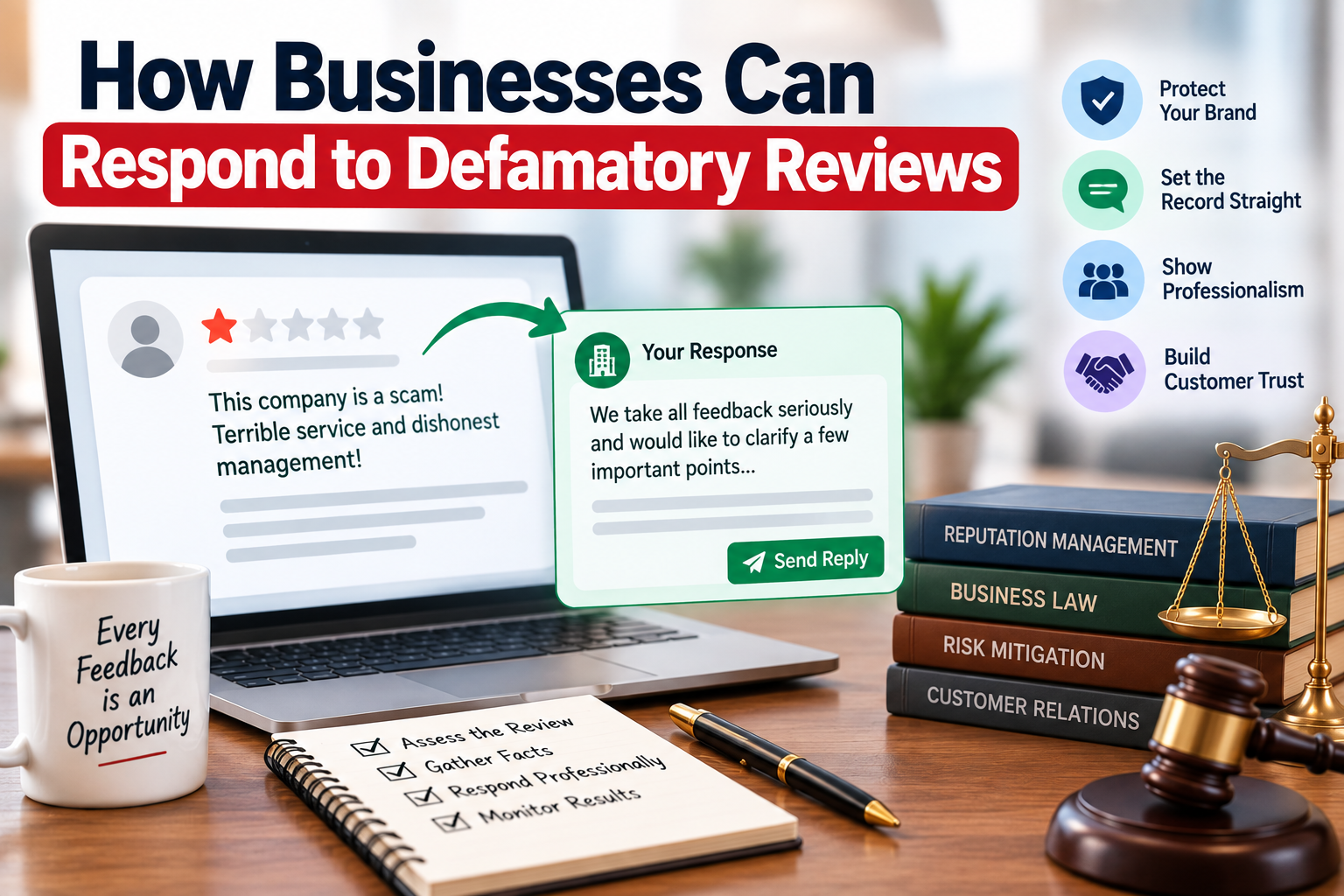
Online reviews can significantly influence how customers perceive a business. While most reviews reflect genuine customer experiences and opinions, some may contain false factual allegations that could harm a company’s reputation. When a review goes beyond criticism and includes potentially defamatory statements, businesses should respond thoughtfully, professionally, and in accordance with applicable laws and platform policies.
Not every negative review is defamatory. Honest opinions, even if unfavorable, are generally treated differently from false factual claims. Understanding this distinction helps businesses respond appropriately while protecting their reputation.
This guide explains how businesses can respond to potentially defamatory reviews, when to report content, and how to strengthen their online reputation over the long term.
What Is a Defamatory Review?
A defamatory review generally refers to a review that contains false factual statements presented as true and that may damage a person’s or business’s reputation. The legal definition of defamation varies by jurisdiction.
Examples of potentially defamatory content may include:
- False accusations of criminal activity
- Knowingly false claims of fraud
- Fabricated allegations of illegal conduct
- False statements about professional misconduct
- Deliberately misleading factual claims
- Impersonation combined with false allegations
By contrast, statements such as “I was disappointed with the service” or “I would not return” are generally expressions of opinion rather than factual allegations.
Stay Calm Before Responding
Receiving a damaging review can be frustrating, but reacting emotionally may worsen the situation.
Before responding:
- Read the review carefully.
- Save a copy of the content.
- Verify the facts internally.
- Determine whether the reviewer may have been a genuine customer.
- Review the platform’s policies.
A measured approach helps protect your reputation.
Determine Whether the Review Violates Platform Policies
Many review platforms prohibit content such as:
- Fake reviews
- Spam
- Harassment
- Hate speech
- Threats
- Impersonation
- Reviews unrelated to actual customer experiences
- Other prohibited content
If the review appears to violate the platform’s guidelines, you may submit a report for moderation.
Keep in mind that criticism alone is generally not sufficient for removal.
Preserve Evidence
Before taking any action, keep records of the review.
Useful documentation may include:
- Screenshots
- Review date and time
- Reviewer’s username
- Business records related to the incident
- Any communications relevant to the review
Maintaining accurate records can be helpful if the matter requires further review.
Respond Professionally
If appropriate, post a calm and respectful public response.
A professional response should:
- Thank the reviewer for sharing feedback.
- State that your business takes concerns seriously.
- Clarify factual inaccuracies without revealing confidential information.
- Invite the reviewer to discuss the matter privately.
- Maintain a courteous tone.
Potential customers often judge a business by how it responds to criticism.
Report the Review
If you believe the review violates a platform’s policies, use the platform’s official reporting process.
When submitting a report:
- Choose the most appropriate reporting reason.
- Provide accurate information.
- Avoid exaggerating your claims.
- Follow the platform’s instructions.
Reporting requests a review by the platform but does not guarantee removal.
Avoid Public Arguments
Public disputes rarely improve the situation.
Avoid:
- Personal attacks
- Emotional responses
- Revealing private customer information
- Threatening legal action publicly
- Accusing the reviewer without evidence
Professionalism helps preserve customer trust.
Seek Legal Advice When Appropriate
If a review contains serious false factual allegations that may have legal implications, consult a qualified lawyer familiar with the laws in your jurisdiction.
Legal advice may be appropriate when reviews include allegations such as:
- Criminal conduct
- Fraud
- Serious professional misconduct
- Defamatory false statements causing significant harm
Only a legal professional can advise whether a claim may meet the legal requirements for defamation in your jurisdiction.
Continue Building Positive Reviews
One negative review has less impact when it is balanced by many authentic positive reviews.
Encourage satisfied customers to leave honest feedback by:
- Delivering excellent service
- Politely requesting reviews
- Making the review process convenient
- Responding to all feedback respectfully
Never buy fake reviews or pressure customers to leave positive ratings.
Monitor Your Online Reputation
Regular monitoring helps businesses identify issues early.
Monitor:
- Google Reviews
- Yelp
- Glassdoor
- Industry-specific review sites
- Social media mentions
- Search engine results
Early detection allows for quicker responses.
Learn From Legitimate Feedback
Not every critical review is defamatory.
Constructive criticism can highlight opportunities to improve:
- Customer service
- Communication
- Products
- Services
- Internal processes
- Staff training
Continuous improvement supports long-term success.
Train Employees
Employees who interact with customers influence your reputation every day.
Training should include:
- Professional communication
- Complaint resolution
- Customer service standards
- Brand values
- Escalation procedures
A well-trained team helps reduce future disputes.
Build a Long-Term Reputation Strategy
Successful reputation management involves more than responding to individual reviews.
A long-term strategy should include:
- Reputation monitoring
- Review management
- Customer engagement
- Search engine optimization (SEO)
- Helpful content creation
- Strong customer service
- Consistent branding
- Continuous improvement
Proactive reputation management strengthens customer confidence.
Common Mistakes to Avoid
Businesses should avoid:
- Assuming every negative review is defamatory
- Responding emotionally
- Ignoring customer concerns
- Posting confidential customer information
- Buying fake reviews
- Making unsupported accusations
A thoughtful and ethical approach is more effective.
Benefits of Professional Review Management
Businesses that respond professionally often experience:
- Greater customer trust
- Stronger brand credibility
- Better online reputation
- Improved customer relationships
- Increased customer loyalty
- Higher engagement
- More balanced review profiles
- Sustainable business growth
Professionalism builds confidence over time.
Conclusion
Potentially defamatory reviews require careful handling. While businesses should protect their reputation, they should also recognize that genuine customer opinions are generally different from false factual allegations. Before taking action, review the content carefully, preserve evidence, understand the platform’s policies, and respond professionally where appropriate.
If a review appears to violate platform guidelines, use the official reporting process. If it contains serious false allegations with possible legal consequences, seek advice from a qualified legal professional. By combining ethical reputation management, excellent customer service, and consistent customer engagement, businesses can build a strong and resilient online reputation that supports long-term success.
Frequently Asked Questions (FAQs)
What is a defamatory review?
A defamatory review generally contains false factual statements presented as true that may harm a person’s or business’s reputation. The legal definition varies depending on the jurisdiction.
Is every negative review defamatory?
No. Honest opinions and genuine customer experiences are generally different from defamatory statements. A negative opinion alone is usually not considered defamation.
Can businesses report defamatory reviews?
Yes. If a review appears to violate a platform’s policies, businesses can report it through the platform’s official reporting process. The platform decides whether the content violates its guidelines.
Should businesses respond publicly to defamatory reviews?
If appropriate, a professional and respectful response can help reassure potential customers. Avoid emotional language, personal attacks, or revealing confidential customer information.
When should a business seek legal advice?
If a review contains serious false factual allegations—such as accusations of criminal conduct, fraud, or professional misconduct—and may cause significant harm, consulting a qualified lawyer may be appropriate.
What is the best way to reduce the impact of defamatory reviews?
Maintain excellent customer service, encourage authentic customer feedback, monitor your online reputation regularly, respond professionally to reviews, and follow the reporting procedures provided by the relevant review platform.
How can businesses build a stronger online reputation over time?
Businesses can strengthen their reputation by consistently delivering quality service, responding respectfully to customer feedback, publishing helpful content, monitoring review platforms, maintaining accurate business information, and focusing on long-term customer satisfaction.
Leave a Reply