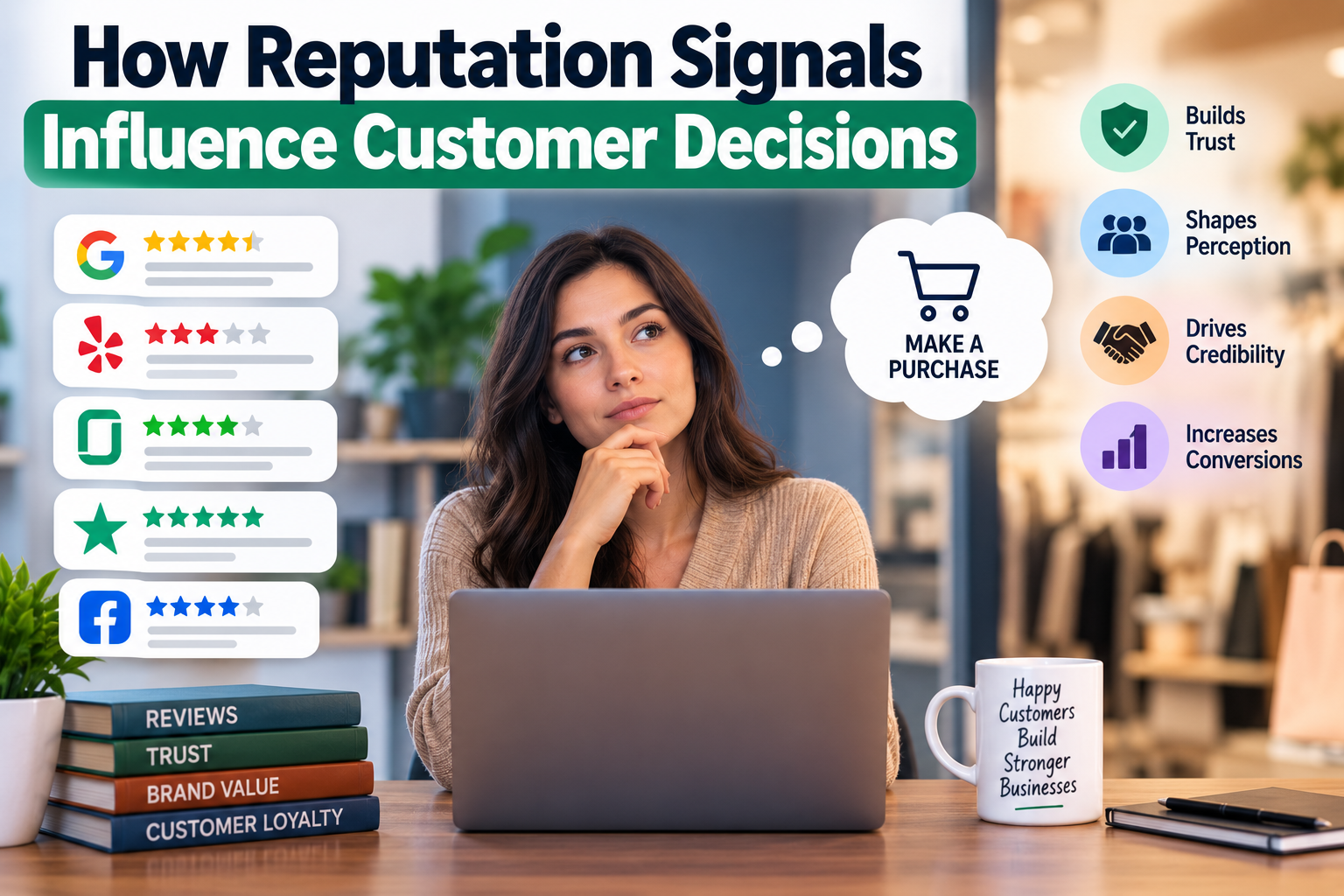
Customers rarely make purchasing decisions based on price or advertising alone. Before choosing a business, many people research its online presence to determine whether it appears trustworthy, reliable, and credible. They read reviews, explore search engine results, visit company websites, check social media profiles, and look for signs that other customers have had positive experiences.
These indicators, often called reputation signals, shape first impressions and influence buying decisions. Strong reputation signals can increase customer confidence, while weak or inconsistent signals may cause potential customers to consider alternative businesses.
This guide explains what reputation signals are, why they matter, and how businesses can strengthen them to build lasting customer trust.
What Are Reputation Signals?
Reputation signals are the pieces of information customers use to evaluate a business before making a decision.
Common reputation signals include:
- Customer reviews
- Star ratings
- Search engine results
- Business website quality
- Social media activity
- Customer testimonials
- Media coverage
- Industry recognition
Together, these signals create an overall impression of your brand.
Why Reputation Signals Matter
Customers often compare multiple businesses before making a purchase.
Positive reputation signals can help:
- Build trust
- Increase credibility
- Reduce purchase uncertainty
- Encourage customer engagement
- Support buying decisions
- Improve brand perception
- Strengthen customer loyalty
- Increase conversions
Trust is often a deciding factor when customers have several similar options.
Customer Reviews
Reviews are among the most influential reputation signals.
Potential customers often look for:
- Recent reviews
- Detailed customer experiences
- Balanced feedback
- Professional business responses
- Consistent service quality
A healthy mix of authentic reviews helps customers form realistic expectations.
Star Ratings
Many consumers notice star ratings before reading individual reviews.
Although ratings are only one factor, they often influence:
- First impressions
- Click-through rates
- Local business comparisons
- Purchase confidence
Consistently delivering quality service is the best way to maintain strong ratings.
Search Engine Results
Search results frequently provide a customer’s first impression of a business.
People may review:
- Business website
- Review platforms
- News articles
- Business profiles
- Images
- Frequently asked questions
Accurate and positive search visibility strengthens credibility.
Business Website Quality
A professional website reinforces customer confidence.
Customers expect:
- Clear navigation
- Mobile-friendly design
- Secure browsing
- Updated information
- Easy contact options
- Professional appearance
An outdated website can reduce trust, even if your products or services are excellent.
Consistent Business Information
Customers expect consistent information across every online platform.
Keep your:
- Business name
- Address
- Phone number
- Website
- Business hours
- Service information
accurate and consistent across directories and listings.
Social Media Presence
Many customers check social media before contacting a business.
A professional presence demonstrates:
- Active customer engagement
- Brand personality
- Responsiveness
- Transparency
- Community involvement
Consistent communication strengthens customer relationships.
Professional Responses to Reviews
How a business responds to reviews influences public perception.
Effective responses should:
- Thank customers
- Address concerns respectfully
- Offer solutions when appropriate
- Maintain a professional tone
- Avoid defensive language
Potential customers often evaluate responses as carefully as reviews themselves.
Valuable Content
Educational content helps establish authority.
Useful content includes:
- Blog articles
- Buying guides
- Frequently asked questions
- Industry insights
- Tutorials
- Case studies
Helpful information demonstrates expertise and supports customer confidence.
Media Coverage
Positive media mentions can strengthen credibility.
Media coverage may demonstrate:
- Industry expertise
- Business achievements
- Community involvement
- Product launches
- Professional recognition
Third-party recognition often reinforces trust.
Customer Testimonials
Testimonials allow businesses to highlight positive customer experiences.
Effective testimonials are:
- Genuine
- Specific
- Relevant
- Easy to understand
- Based on real customer experiences
Authenticity is more valuable than exaggerated claims.
Transparency
Customers value businesses that communicate openly.
Transparency includes:
- Honest pricing
- Clear policies
- Accurate product information
- Prompt communication
- Realistic expectations
Transparent businesses often earn stronger long-term trust.
Consistent Customer Experience
Every customer interaction contributes to your reputation.
Consistency across:
- Sales
- Customer support
- Delivery
- Communication
- Product quality
helps build lasting confidence.
Monitor Your Reputation
Regular monitoring allows businesses to identify opportunities for improvement.
Monitor:
- Customer reviews
- Search engine results
- Social media mentions
- Business directories
- Industry websites
- News coverage
Early awareness supports proactive reputation management.
Common Mistakes That Damage Reputation Signals
Businesses should avoid:
- Ignoring customer feedback
- Buying fake reviews
- Inconsistent business information
- Poor customer communication
- Outdated website content
- Slow response times
Small issues can gradually weaken customer confidence.
Build Long-Term Trust
Strong reputation signals develop over time through consistent effort.
Focus on:
- Excellent customer service
- Honest communication
- Authentic reviews
- Helpful content
- Professional branding
- Continuous improvement
Long-term trust cannot be built overnight.
Benefits of Strong Reputation Signals
Businesses with positive reputation signals often experience:
- Greater customer trust
- Higher conversion rates
- Better customer retention
- Increased referrals
- Improved search visibility
- Stronger brand credibility
- Greater competitive advantage
- Sustainable business growth
A positive reputation supports every stage of the customer journey.
Conclusion
Reputation signals influence how customers evaluate businesses long before they make a purchase. Reviews, search results, website quality, social media activity, customer testimonials, media coverage, and professional communication all contribute to the level of trust customers place in a brand.
Businesses that consistently deliver excellent customer experiences, maintain accurate information, publish valuable content, and respond professionally to feedback create stronger reputation signals that encourage customer confidence. By investing in long-term reputation management rather than short-term tactics, organizations can strengthen their credibility, attract more customers, and support sustainable business growth.
Frequently Asked Questions (FAQs)
What are reputation signals?
Reputation signals are the online indicators customers use to evaluate a business, such as reviews, ratings, search results, website quality, social media activity, testimonials, and media mentions.
Why are reputation signals important?
They help customers decide whether a business appears trustworthy, reliable, and credible before making a purchase or contacting the company.
Which reputation signal has the biggest impact?
Customer reviews, search engine results, website quality, and professional responses to feedback are among the most influential reputation signals, although their importance varies depending on the industry and customer needs.
Can a business improve its reputation signals?
Yes. Businesses can strengthen reputation signals by providing excellent customer service, encouraging authentic reviews, maintaining accurate business information, publishing helpful content, and engaging professionally with customers online.
Do negative reviews always discourage customers?
Not necessarily. Many customers expect to see a mix of positive and negative reviews. Businesses that respond respectfully and address concerns professionally often build greater trust than those with no criticism at all.
Does SEO influence reputation signals?
Yes. Search engine optimization helps improve the visibility of accurate, relevant, and helpful information about your business, making it easier for customers to find trustworthy content.
What is the best long-term strategy for building strong reputation signals?
The most effective approach is to consistently deliver outstanding customer experiences, encourage genuine feedback, maintain a professional online presence, monitor your reputation regularly, and communicate honestly across all digital channels.
Leave a Reply