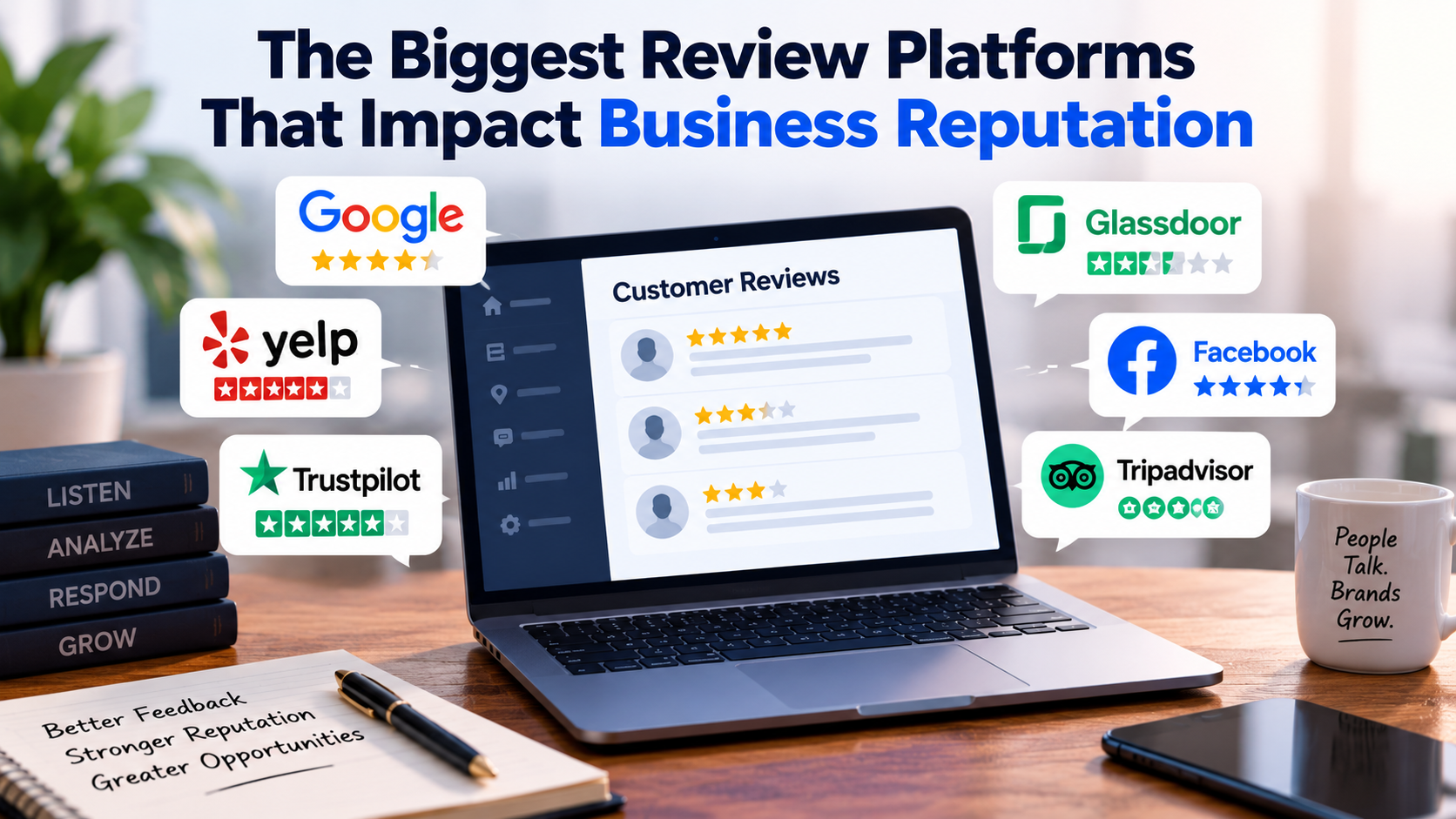
Online reviews have become one of the most influential factors in how customers evaluate businesses. Before making a purchase, booking a service, or contacting a company, many people check reviews to understand the experiences of previous customers. These reviews help shape trust, influence buying decisions, and even affect search engine visibility.
For businesses, managing reviews is no longer optional. A strong presence across major review platforms can improve credibility, attract new customers, and strengthen brand reputation. On the other hand, ignoring reviews or failing to maintain accurate business information can lead to missed opportunities and reduced customer confidence.
This guide explores the biggest review platforms that impact business reputation and explains why every business should actively monitor and manage them.
Why Review Platforms Matter
Review platforms serve as trusted sources of information for consumers.
Positive reviews can help businesses:
- Build customer trust
- Increase sales
- Improve local search visibility
- Strengthen brand credibility
- Generate referrals
- Improve customer engagement
- Support long-term growth
- Differentiate from competitors
Customers often compare businesses across multiple review websites before making decisions.
Google Reviews
Google Reviews is one of the most influential review platforms because reviews appear directly in Google Search and Google Maps.
Benefits include:
- High visibility in search results
- Improved local SEO
- Customer trust
- Easy access for customers
- Business profile integration
Businesses should regularly monitor reviews, respond professionally, and keep their Google Business Profile updated.
Yelp
Yelp is widely used for restaurants, local businesses, healthcare providers, retail stores, and service companies.
Yelp helps customers evaluate:
- Overall ratings
- Customer experiences
- Business photos
- Service quality
- Business information
Maintaining an active Yelp profile demonstrates professionalism and responsiveness.
Glassdoor
Glassdoor focuses on employer reputation rather than customer experiences.
Current and former employees can share information about:
- Workplace culture
- Company ratings
- Salaries
- Interview experiences
- Employee benefits
A strong Glassdoor presence supports recruitment and employer branding.
Facebook Reviews and Recommendations
Many customers interact with businesses through Facebook.
Recommendations and reviews can influence:
- Local customers
- Social media audiences
- Community trust
- Brand visibility
Businesses should respond to customer comments and maintain updated business information.
Trustpilot
Trustpilot is widely used by businesses across many industries.
Customers often review:
- Products
- Customer service
- Online shopping experiences
- Delivery quality
- Overall satisfaction
Trustpilot profiles can strengthen credibility when supported by authentic customer feedback.
TripAdvisor
TripAdvisor is particularly important for:
- Hotels
- Restaurants
- Tourist attractions
- Travel agencies
- Vacation services
Travelers frequently compare businesses using TripAdvisor reviews before making bookings.
Better Business Bureau (BBB)
The Better Business Bureau focuses on business trust and customer complaint resolution.
Customers often review:
- Complaint history
- Business accreditation
- Customer service
- Company responsiveness
A well-managed BBB profile can reinforce business credibility.
Industry-Specific Review Platforms
Many industries have specialized review websites.
Examples include:
- Healthcare provider review platforms
- Legal service directories
- Real estate review websites
- Home service platforms
- Software review sites
Industry-specific reviews often influence highly targeted customer decisions.
Why Customers Use Multiple Platforms
Consumers rarely rely on a single review website.
They often compare:
- Ratings
- Written reviews
- Photos
- Business responses
- Overall consistency
A positive reputation across multiple platforms builds stronger trust.
Respond to Reviews Professionally
Whether reviews are positive or negative, businesses should respond respectfully.
Best practices include:
- Thank customers for feedback.
- Address concerns professionally.
- Avoid arguments.
- Offer solutions where appropriate.
- Keep responses polite and concise.
Professional communication reflects positively on your brand.
Encourage Genuine Customer Reviews
Businesses should encourage authentic reviews after successful customer interactions.
Avoid:
- Buying fake reviews
- Posting reviews yourself
- Offering incentives solely for positive ratings
- Pressuring customers
Authentic feedback creates long-term credibility.
Monitor Reviews Regularly
Regular monitoring helps businesses identify issues early.
Track reviews across:
- Yelp
- Glassdoor
- Trustpilot
- Industry-specific platforms
Consistent monitoring supports proactive reputation management.
Maintain Accurate Business Information
Ensure that your business details remain consistent across every platform.
Keep updated:
- Business name
- Address
- Phone number
- Website
- Business hours
- Services
- Contact information
Accurate listings improve both customer trust and local SEO.
Learn From Customer Feedback
Reviews provide valuable business insights.
They can highlight opportunities to improve:
- Customer service
- Product quality
- Communication
- Response times
- Overall customer experience
Listening to feedback supports continuous improvement.
Build a Strong Online Reputation
Review platforms are only one part of your digital presence.
Support your reputation through:
- High-quality website content
- SEO
- Social media engagement
- Media mentions
- Educational resources
- Excellent customer service
A balanced online presence strengthens credibility.
Common Review Management Mistakes
Businesses should avoid:
- Ignoring reviews
- Responding emotionally
- Buying fake reviews
- Leaving outdated business information
- Monitoring only one platform
- Failing to address customer concerns
- Using inconsistent branding
- Delaying responses
Ethical review management builds lasting trust.
Long-Term Benefits of Managing Review Platforms
Businesses that actively manage reviews often experience:
- Greater customer confidence
- Higher review ratings
- Improved search visibility
- Better customer retention
- Increased referrals
- Stronger brand authority
- Higher conversion rates
- Sustainable business growth
Consistent review management supports long-term success.
Conclusion
Review platforms play a major role in shaping how customers perceive businesses. From Google Reviews and Yelp to Glassdoor, Trustpilot, Facebook, TripAdvisor, and industry-specific websites, each platform contributes to your overall online reputation.
Rather than focusing on only one review site, businesses should adopt a comprehensive strategy that includes monitoring reviews, responding professionally, encouraging authentic customer feedback, maintaining accurate business information, and continuously improving customer experiences. A proactive approach to review management helps build trust, strengthen credibility, and support sustainable business growth.
Frequently Asked Questions (FAQs)
Which review platform is most important for businesses?
Google Reviews is generally the most influential because reviews appear directly in Google Search and Google Maps, making them highly visible to potential customers.
Why should businesses monitor multiple review platforms?
Customers often compare businesses across several review websites before making decisions. Monitoring multiple platforms helps maintain a consistent and trustworthy online reputation.
Are negative reviews always harmful?
No. Genuine negative reviews can provide valuable feedback and give businesses an opportunity to demonstrate professionalism by responding respectfully and addressing customer concerns.
Can businesses remove negative reviews?
Businesses generally cannot remove reviews simply because they are negative. Most platforms only remove reviews that violate their content or community guidelines.
How can businesses encourage more customer reviews?
The best approach is to provide excellent customer service and politely ask satisfied customers to leave honest feedback after a positive experience.
Do review platforms affect SEO?
Yes. Customer reviews, particularly on platforms like Google, can influence local search visibility and contribute to a stronger online presence.
What is the best long-term strategy for managing online reviews?
Businesses should consistently monitor review platforms, respond professionally, encourage authentic customer feedback, maintain accurate business information, and use customer insights to improve products and services.
Leave a Reply