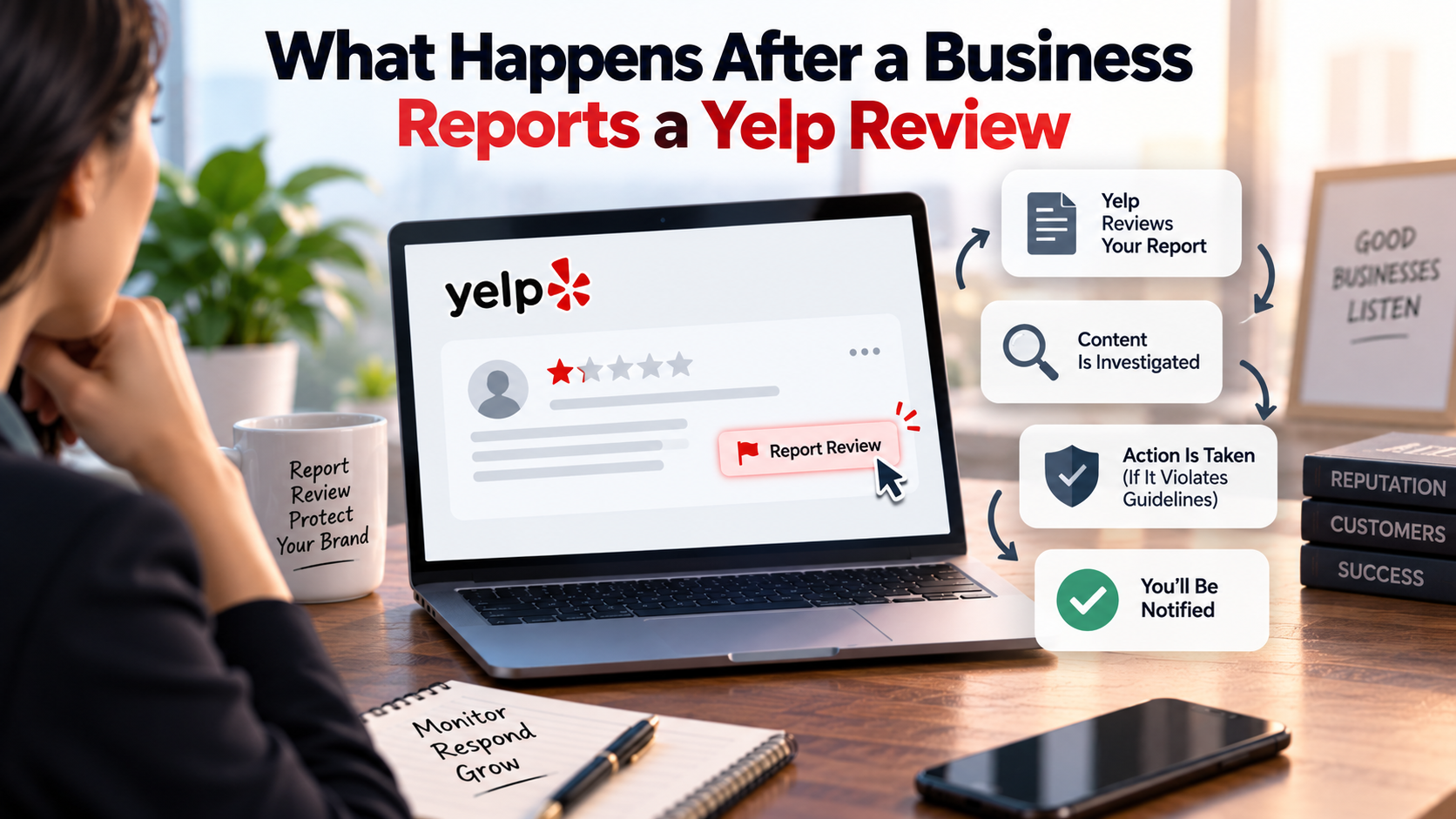
Online reviews play an important role in how customers evaluate businesses, and Yelp remains one of the most widely used review platforms for restaurants, local services, healthcare providers, retail stores, and many other businesses. While most reviews reflect genuine customer experiences, businesses may occasionally encounter reviews they believe violate Yelp’s content policies.
When this happens, businesses have the option to report the review for Yelp’s moderation team to evaluate. However, reporting a review does not automatically result in its removal. Yelp reviews each report against its published guidelines before deciding whether any action is appropriate.
This guide explains what happens after a business reports a Yelp review, how Yelp evaluates reported content, and what businesses should expect throughout the review process.
Why Businesses Report Yelp Reviews
Businesses may report reviews when they believe the content violates Yelp’s policies rather than simply because it is negative.
Common reasons include:
- Suspected fake reviews
- Spam
- Conflicts of interest
- Harassment
- Hate speech
- Impersonation
- Threats
- Reviews unrelated to an actual customer experience
Not every unfavorable review qualifies for removal.
How the Reporting Process Begins
When a business reports a review, Yelp records the report and forwards it for evaluation.
The report typically includes:
- The review being reported
- The reported reason
- Information provided by the reporting business
- Relevant account details
Submitting a report starts the moderation process but does not guarantee any action.
Yelp Reviews the Report
After receiving the report, Yelp evaluates whether the review violates its content guidelines.
The moderation process may involve:
- Reviewing the review’s content
- Checking for policy violations
- Evaluating account activity
- Looking for unusual behavior patterns
- Comparing the review against Yelp’s published policies
The exact review process is not publicly disclosed in detail.
Possible Outcomes
After reviewing the report, Yelp may decide to:
- Leave the review unchanged
- Remove the review if it violates policies
- Take action against abusive accounts in certain situations
- Maintain the review if it reflects a genuine customer experience
Each case is evaluated individually.
Negative Reviews Are Not Automatically Removed
Many businesses assume negative reviews will be removed after reporting them.
In reality, Yelp generally allows genuine customer opinions to remain visible, even when they are critical.
A review typically needs to violate Yelp’s content guidelines before moderation action is taken.
Why Some Reviews Stay Online
A review may remain published if it:
- Describes a genuine customer experience
- Follows Yelp’s content guidelines
- Contains opinions rather than prohibited content
- Does not violate platform policies
Businesses may disagree with a review, but disagreement alone is usually not sufficient for removal.
Why Some Reviews Are Removed
A reported review may be removed if Yelp determines that it violates its guidelines.
Examples may include:
- Fake or misleading reviews
- Spam
- Reviews written by competitors
- Conflicts of interest
- Harassment
- Hate speech
- Threats
- Explicit or illegal content
Only Yelp can determine whether a review violates its policies.
Responding While Waiting
Businesses do not need to remain inactive while a report is under review.
They can:
- Respond professionally to the review
- Acknowledge customer concerns
- Clarify misunderstandings politely
- Offer to continue the discussion privately
- Demonstrate commitment to customer service
Professional responses often improve public perception.
Continue Encouraging Genuine Reviews
One reported review should not become the focus of your entire reputation strategy.
Continue encouraging authentic feedback from satisfied customers through positive service experiences.
A steady stream of genuine reviews helps provide a balanced and trustworthy overall profile.
Monitor Your Yelp Profile
Regular monitoring helps businesses identify issues quickly.
Check for:
- New reviews
- Customer questions
- Updated ratings
- Suspicious review activity
- Changes to business information
Consistent monitoring supports stronger reputation management.
Avoid Policy Violations
Businesses should avoid practices that may violate Yelp’s guidelines.
Do not:
- Buy fake reviews
- Ask employees to post misleading reviews
- Pressure customers into leaving positive ratings
- Create multiple accounts to influence ratings
- Harass reviewers
Ethical review management builds lasting credibility.
Improve Customer Experience
The strongest reputation strategy begins with customer satisfaction.
Focus on:
- Quality service
- Clear communication
- Fast problem resolution
- Honest business practices
- Friendly customer support
Positive experiences naturally generate positive reviews.
Learn From Legitimate Feedback
Not every critical review is harmful.
Constructive feedback can help identify opportunities to improve:
- Products
- Services
- Customer support
- Business processes
- Communication
Businesses that learn from feedback often strengthen customer loyalty.
Common Misunderstandings
Several myths exist about Yelp review reporting.
Common misconceptions include:
- Reporting guarantees removal.
- Businesses can delete reviews themselves.
- Negative reviews automatically violate policies.
- Multiple reports always lead to removal.
- Yelp removes reviews simply because they affect ratings.
Understanding Yelp’s moderation process helps businesses set realistic expectations.
Best Practices for Long-Term Yelp Reputation Management
Successful businesses consistently:
- Monitor reviews
- Respond professionally
- Encourage genuine customer feedback
- Follow Yelp’s policies
- Improve customer service
- Maintain accurate business information
- Build customer trust
- Protect their online reputation
Long-term consistency is more effective than reacting to individual reviews.
Long-Term Benefits of Ethical Review Management
Responsible review management can lead to:
- Stronger customer trust
- Better online reputation
- Increased customer loyalty
- Higher engagement
- Improved local visibility
- Greater business credibility
- Better customer relationships
- Sustainable business growth
Authenticity remains the foundation of lasting success.
Conclusion
Reporting a Yelp review is an appropriate step when a business believes the review violates Yelp’s content policies. However, reporting a review does not guarantee its removal. Yelp evaluates each report individually and generally removes content only when it determines that the review violates its published guidelines.
Businesses should focus on a balanced reputation strategy that includes monitoring reviews, responding professionally, encouraging authentic customer feedback, and continuously improving customer experiences. By understanding Yelp’s moderation process and following ethical review management practices, businesses can build lasting trust and maintain a strong online reputation.
Frequently Asked Questions (FAQs)
What happens after a business reports a Yelp review?
After a review is reported, Yelp evaluates it against its content guidelines to determine whether it violates platform policies. The review may remain visible or be removed depending on the outcome of that evaluation.
Does reporting a Yelp review guarantee removal?
No. Reporting a review does not guarantee removal. Yelp generally removes reviews only if they violate its content policies.
Can businesses delete Yelp reviews themselves?
No. Businesses cannot directly remove customer reviews from Yelp. Only Yelp can decide whether a reported review should be removed based on its guidelines.
What types of Yelp reviews may violate platform policies?
Examples include fake reviews, spam, conflicts of interest, harassment, hate speech, threats, impersonation, and reviews unrelated to a genuine customer experience.
Should businesses respond to a reported review?
Yes. If appropriate, businesses can respond professionally while the report is being reviewed. A respectful response demonstrates accountability and customer care.
Why do some negative Yelp reviews remain online?
Negative reviews that reflect genuine customer experiences and comply with Yelp’s guidelines generally remain visible, even if they are unfavorable.
What is the best long-term strategy for managing Yelp reviews?
The most effective approach is to provide excellent customer service, encourage authentic customer feedback, monitor reviews regularly, respond professionally, and follow Yelp’s review policies.
Leave a Reply