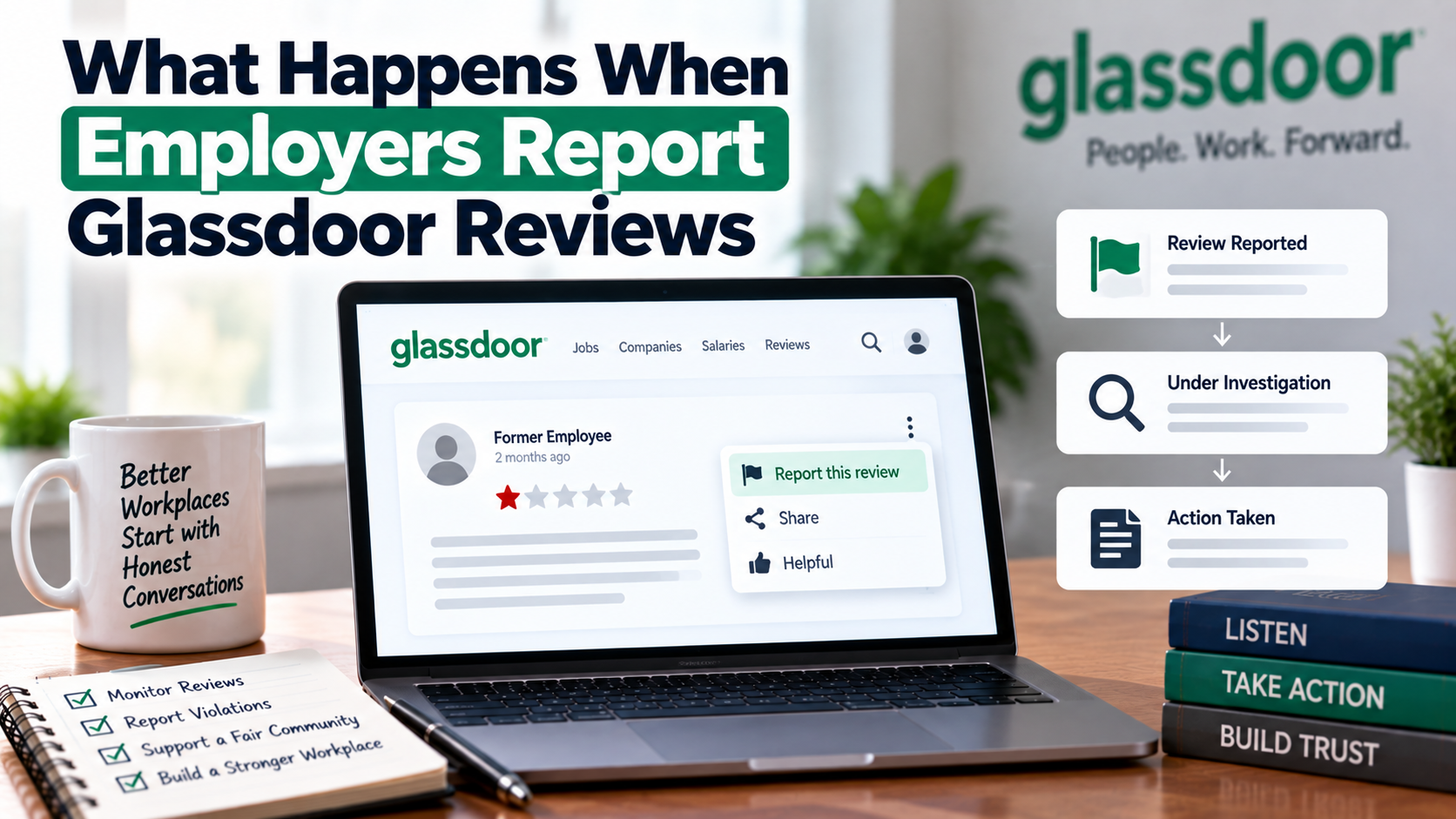
Glassdoor has become one of the most influential platforms for job seekers researching employers. Current and former employees use it to share workplace experiences, company ratings, salary information, interview experiences, and insights into organizational culture. Because many candidates review this information before applying for jobs, Glassdoor profiles can significantly influence an employer’s reputation.
Sometimes, employers may believe that a review violates Glassdoor’s Community Guidelines or contains content that should not appear on the platform. In such situations, employers can report the review for evaluation. However, reporting a review does not automatically result in its removal. Glassdoor reviews reported content against its published policies before making a decision.
This guide explains what happens after an employer reports a Glassdoor review, how the review process works, and what employers should realistically expect.
Why Employers Report Glassdoor Reviews
Employers typically report reviews when they believe the content violates Glassdoor’s Community Guidelines rather than simply because it is critical.
Common reasons include:
- Fake reviews
- Harassment or abusive language
- Threats
- Hate speech
- Conflicts of interest
- Impersonation
- Confidential or sensitive information
- Reviews that violate Glassdoor’s policies
A negative opinion alone is generally not enough for a review to be removed.
How the Reporting Process Begins
When an employer reports a review, Glassdoor receives the report and begins evaluating the content.
The report may include:
- The review in question
- The reason for reporting
- Supporting information provided by the employer
- Relevant account details
Submitting a report starts the moderation process but does not guarantee removal.
Glassdoor Reviews the Report
Glassdoor evaluates reported reviews against its Community Guidelines.
The review process may include:
- Examining the review content
- Checking for policy violations
- Reviewing contextual information
- Evaluating unusual account activity
- Comparing the review with platform guidelines
The exact moderation methods are not publicly disclosed.
Possible Outcomes
After evaluating the report, Glassdoor may decide to:
- Leave the review unchanged
- Remove the review if it violates its guidelines
- Request additional information in certain situations
- Take action against accounts that repeatedly violate platform policies
Each report is assessed individually.
Negative Reviews Are Not Automatically Removed
Many employers believe that reporting a negative review will lead to its removal.
In reality, Glassdoor generally allows genuine employee opinions to remain visible, even when they contain criticism.
As long as the review complies with Community Guidelines, it will often remain on the platform.
Why Some Reviews Stay Published
A review may remain online if it:
- Reflects a genuine employee experience
- Complies with Glassdoor’s Community Guidelines
- Contains opinions rather than prohibited content
- Does not violate platform policies
Disagreement with an employee’s opinion is generally not sufficient for removal.
Why Some Reviews May Be Removed
Glassdoor may remove reviews that violate its policies.
Examples may include:
- Fake reviews
- Harassment
- Hate speech
- Threats
- Confidential business information
- Personal attacks
- Impersonation
- Spam
Only Glassdoor determines whether a review violates its guidelines.
Respond Professionally
Glassdoor allows employers to respond to reviews in many cases.
Professional responses should:
- Thank the reviewer for their feedback
- Acknowledge concerns respectfully
- Explain improvements when appropriate
- Avoid defensive language
- Demonstrate commitment to employees
Future candidates often evaluate employer responses alongside the reviews themselves.
Focus on Workplace Improvements
The most effective reputation strategy begins inside the organization.
Employers should regularly improve:
- Employee communication
- Leadership transparency
- Workplace culture
- Career development
- Recognition programs
- Employee support
Positive workplace experiences naturally encourage balanced employee feedback.
Encourage Honest Employee Feedback
Rather than focusing only on individual reviews, organizations should create an environment where employees feel comfortable sharing genuine experiences.
Authentic feedback helps:
- Identify improvement opportunities
- Build trust
- Strengthen employer branding
- Demonstrate transparency
Employers should never pressure employees to leave positive reviews.
Monitor Your Employer Reputation
Regular monitoring helps employers understand how their organization is being perceived.
Monitor:
- Glassdoor reviews
- Company ratings
- Interview feedback
- Salary discussions
- Social media mentions
- Employer-related news
Ongoing monitoring supports proactive reputation management.
Build a Strong Employer Brand
A positive employer reputation extends beyond review platforms.
Strengthen your employer brand through:
- Career pages
- Employee success stories
- Community involvement
- Professional development opportunities
- Company culture initiatives
- Transparent communication
A strong employer brand helps attract quality candidates.
Learn From Constructive Feedback
Not every negative review represents a reputation threat.
Constructive criticism may highlight opportunities to improve:
- Management practices
- Communication
- Workplace policies
- Employee engagement
- Hiring processes
Organizations that listen to feedback often strengthen employee satisfaction.
Common Misunderstandings
Several misconceptions exist regarding Glassdoor review reporting.
Examples include:
- Employers can delete reviews themselves.
- Reporting guarantees removal.
- Negative reviews automatically violate policies.
- Every low rating is fake.
- Multiple reports ensure a review will disappear.
Understanding the moderation process helps set realistic expectations.
Best Practices for Long-Term Employer Reputation
Successful employers consistently:
- Monitor employee feedback
- Respond professionally
- Improve workplace culture
- Communicate transparently
- Encourage authentic feedback
- Follow Glassdoor’s policies
- Build employer branding
- Invest in employee experience
Long-term credibility develops through consistent effort.
Long-Term Benefits of Ethical Reputation Management
Employers that actively manage their reputation often experience:
- Greater candidate trust
- Improved employer branding
- Stronger employee engagement
- Better recruitment outcomes
- Increased employee retention
- Higher workplace credibility
- More positive public perception
- Sustainable organizational growth
A trusted employer reputation supports long-term success.
Conclusion
Reporting a Glassdoor review is an appropriate step when an employer believes the content violates Glassdoor’s Community Guidelines. However, submitting a report does not guarantee that the review will be removed. Glassdoor evaluates each report individually and generally removes reviews only when they violate its published policies.
The most effective long-term strategy is to build a positive workplace culture, encourage authentic employee feedback, respond professionally to reviews, and continuously improve the employee experience. By focusing on transparency, communication, and ethical reputation management, employers can strengthen their employer brand and build lasting trust with both current employees and future candidates.
Frequently Asked Questions (FAQs)
What happens after an employer reports a Glassdoor review?
Glassdoor reviews the reported content against its Community Guidelines to determine whether it violates platform policies. The review may remain published or be removed depending on the outcome of that evaluation.
Does reporting a Glassdoor review guarantee removal?
No. Reporting a review does not guarantee removal. Glassdoor generally removes reviews only if they violate its Community Guidelines.
Can employers delete Glassdoor reviews themselves?
No. Employers cannot directly delete reviews. Only Glassdoor can decide whether a review should be removed based on its published policies.
What types of Glassdoor reviews may violate platform policies?
Examples include fake reviews, harassment, threats, hate speech, impersonation, spam, and reviews containing confidential or prohibited information.
Should employers respond to negative Glassdoor reviews?
Yes. Professional and respectful responses demonstrate transparency, show commitment to employee feedback, and can positively influence potential job candidates.
Why do some negative Glassdoor reviews remain online?
Negative reviews that reflect genuine employee experiences and comply with Glassdoor’s Community Guidelines generally remain visible, even if they are critical.
What is the best long-term strategy for managing an employer’s Glassdoor reputation?
The most effective strategy is to improve workplace culture, encourage honest employee feedback, monitor reviews regularly, respond professionally, and maintain transparent communication with current and prospective employees.
Leave a Reply