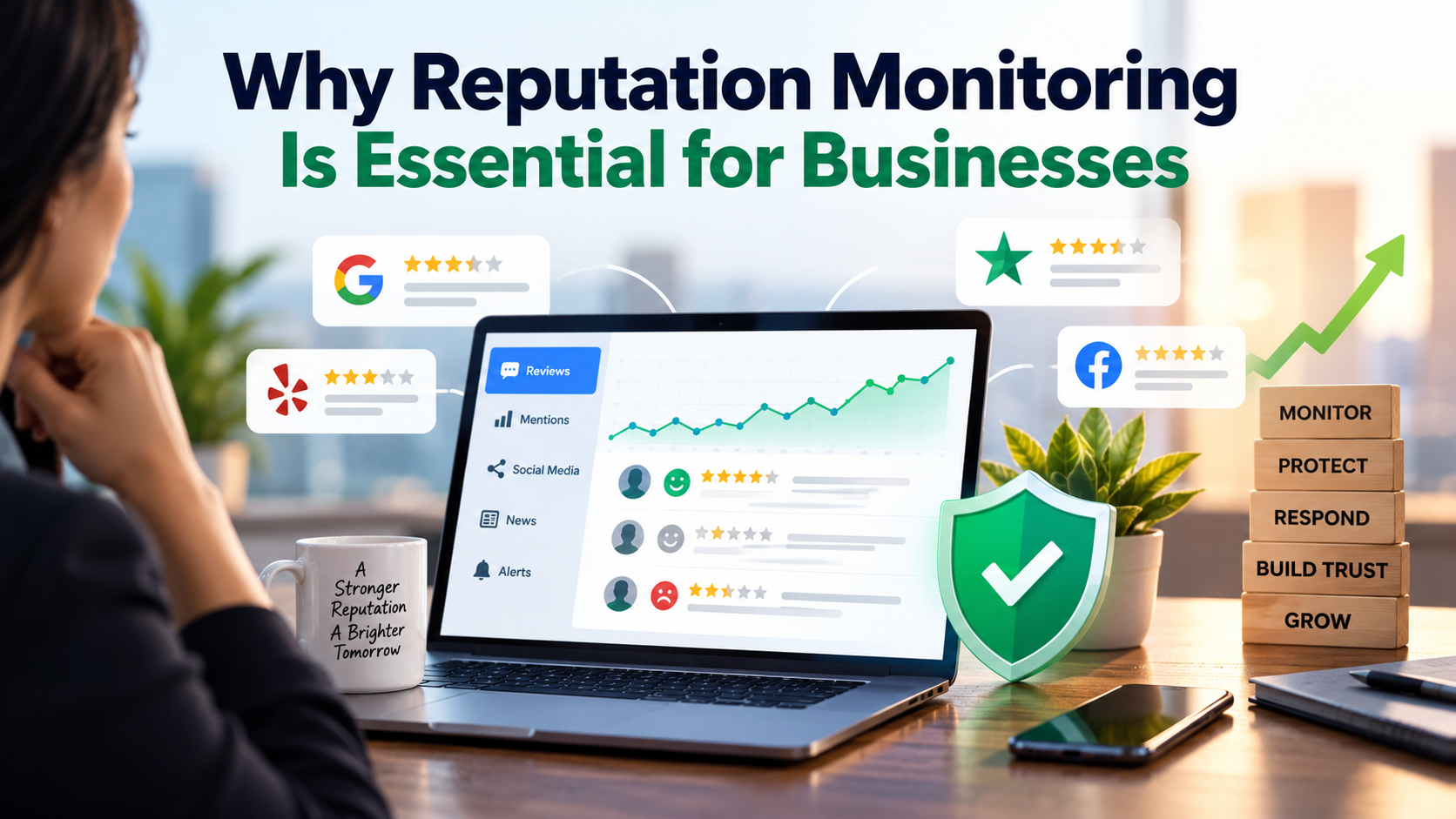
In today’s digital world, a business’s reputation is shaped long before a customer makes contact. People often search online to learn about a company, read customer reviews, compare competitors, and evaluate trustworthiness before making a purchase. A single negative review, misleading article, or unanswered complaint can influence public perception and affect business growth.
Reputation monitoring helps businesses stay informed about what is being said across search engines, review platforms, social media, news websites, blogs, and online forums. Instead of reacting after problems become serious, businesses can identify issues early, respond professionally, and protect the trust they have built with customers.
This guide explains why reputation monitoring is essential, how it supports business success, and the best practices for maintaining a strong online presence.
What Is Reputation Monitoring?
Reputation monitoring is the continuous process of tracking mentions of your business, brand, products, services, and key people across the internet.
It involves monitoring:
- Search engine results
- Customer reviews
- Social media platforms
- News websites
- Blogs
- Online forums
- Business directories
- Video-sharing platforms
The goal is to understand public perception and respond appropriately when necessary.
Why Reputation Monitoring Matters
Customers trust businesses that actively engage with their audience and maintain a professional online presence.
Effective reputation monitoring helps businesses:
- Build customer trust
- Protect brand credibility
- Improve customer satisfaction
- Detect potential issues early
- Strengthen online visibility
- Support long-term growth
- Improve decision-making
- Maintain a competitive advantage
Being aware of your online reputation allows you to act before small issues become larger challenges.
Customers Research Businesses Before Buying
Most consumers research companies online before making purchasing decisions.
They often review:
- Google search results
- Customer reviews
- Business websites
- Social media pages
- News coverage
- Industry directories
Monitoring these sources ensures customers are finding accurate and up-to-date information.
Detect Negative Content Early
Negative content can spread quickly across digital platforms.
Regular monitoring helps identify:
- Negative reviews
- Customer complaints
- Misleading information
- Fake reviews
- Brand impersonation
- Unfavorable media coverage
Early detection allows businesses to respond promptly and reduce potential damage.
Improve Customer Relationships
Customers appreciate businesses that listen and respond.
Monitoring reviews and comments allows businesses to:
- Answer customer questions
- Resolve complaints
- Thank customers for positive feedback
- Address misunderstandings
- Demonstrate accountability
Professional engagement strengthens customer confidence.
Strengthen Online Reputation
Reputation monitoring supports a consistent and trustworthy brand image.
Businesses can:
- Correct inaccurate information
- Update business listings
- Improve customer communication
- Publish helpful content
- Maintain consistent branding
These actions contribute to a stronger online reputation.
Support Search Engine Visibility
Search engines often display reviews, news articles, and business profiles alongside your website.
Monitoring search results helps businesses:
- Identify outdated content
- Improve branded search results
- Strengthen SEO strategies
- Promote authoritative content
- Maintain accurate business information
A strong search presence supports customer trust.
Protect Against Fake Reviews
Fake reviews can mislead customers and affect business credibility.
Monitoring helps identify reviews that may:
- Violate platform policies
- Contain false information
- Originate from suspicious accounts
- Misrepresent customer experiences
Businesses can report policy-violating content through the appropriate review platform.
Monitor Social Media Conversations
Customers frequently discuss businesses on social media.
Monitoring social platforms helps identify:
- Customer feedback
- Brand mentions
- Product discussions
- Service concerns
- Emerging trends
Prompt engagement demonstrates that your business values customer opinions.
Track Media Coverage
News articles and industry publications can influence public perception.
Monitoring media mentions allows businesses to:
- Respond to inaccurate information
- Share positive coverage
- Measure brand visibility
- Identify PR opportunities
Positive media exposure strengthens credibility.
Learn From Customer Feedback
Reputation monitoring provides valuable business insights.
Customer feedback may reveal opportunities to improve:
- Products
- Services
- Customer support
- Communication
- Business operations
Continuous improvement supports long-term success.
Strengthen Crisis Preparedness
Unexpected reputation challenges can arise at any time.
Monitoring enables businesses to:
- Detect emerging issues
- Assess potential risks
- Respond quickly
- Coordinate internal communication
- Reduce the impact of reputation crises
Preparation leads to more effective responses.
Monitor Competitor Reputation
Understanding competitor feedback can reveal industry trends and customer expectations.
Businesses can learn:
- Common customer concerns
- Market opportunities
- Service improvements
- Emerging challenges
Competitive insights help inform business decisions.
Build Long-Term Customer Trust
Trust develops through consistent actions.
Businesses that actively monitor and manage their reputation demonstrate:
- Transparency
- Reliability
- Professionalism
- Customer commitment
These qualities encourage customer loyalty.
Best Practices for Reputation Monitoring
An effective monitoring strategy should include:
- Regular review checks
- Search engine monitoring
- Social media tracking
- News monitoring
- Consistent customer engagement
- Accurate business listings
- Timely responses
- Performance measurement
Consistency is the key to successful reputation management.
Common Reputation Monitoring Mistakes
Businesses should avoid:
- Ignoring online reviews
- Monitoring only one platform
- Delaying responses
- Using inconsistent branding
- Overlooking social media
- Ignoring search engine results
- Failing to update business information
- Responding emotionally to criticism
Avoiding these mistakes strengthens public trust.
Long-Term Benefits of Reputation Monitoring
Businesses that monitor their reputation consistently often experience:
- Higher customer trust
- Better online visibility
- Improved review ratings
- Increased customer loyalty
- Stronger brand authority
- Faster issue resolution
- Better customer relationships
- Sustainable business growth
Long-term consistency creates a resilient brand.
Conclusion
Reputation monitoring is no longer optional for businesses operating in a digital-first world. Customers rely heavily on online information when making decisions, and even a single unresolved issue can influence public perception. By monitoring search results, reviews, social media, news coverage, and customer feedback, businesses can identify challenges early, respond professionally, and strengthen customer trust.
A proactive reputation monitoring strategy not only protects your brand but also supports better customer relationships, improved search visibility, stronger credibility, and long-term business success. Businesses that consistently monitor and manage their online presence are better positioned to adapt, grow, and maintain a trusted reputation in an increasingly competitive marketplace.
Frequently Asked Questions (FAQs)
What is reputation monitoring?
Reputation monitoring is the process of tracking mentions of your business across search engines, review platforms, social media, news websites, blogs, and other online channels to understand and manage public perception.
Why is reputation monitoring important?
It helps businesses identify potential issues early, protect customer trust, improve online reputation, respond to feedback, and maintain a strong digital presence.
What should businesses monitor online?
Businesses should monitor customer reviews, search engine results, social media mentions, news articles, blogs, online forums, business directories, and other public discussions related to their brand.
How often should businesses monitor their reputation?
Businesses should monitor their online reputation regularly. Many organizations review their reputation weekly, while larger businesses often use continuous monitoring tools for real-time updates.
Can reputation monitoring improve customer relationships?
Yes. Monitoring allows businesses to respond promptly to customer questions, resolve concerns, acknowledge positive feedback, and demonstrate their commitment to customer satisfaction.
Does reputation monitoring help with SEO?
Yes. Monitoring search results and maintaining accurate, high-quality online content can support search visibility and help ensure customers find reliable information about your business.
What is the biggest mistake businesses make with reputation monitoring?
One of the most common mistakes is waiting until a reputation issue becomes serious before taking action. Regular monitoring and timely responses are far more effective than reacting after significant damage has already occurred.
Leave a Reply